Long Flute Carbide End Mill Overview
The Long Flute Carbide End Mill is engineered for deep cavity machining, tall walls, and long-reach features where standard length tools cannot safely operate. As a solid carbide tool with a TiAlN coating and a helix angle greater than 45°, it balances rigidity with smooth cutting and efficient chip evacuation in demanding side milling and slotting operations. For shops that need to reach further without sacrificing accuracy, it forms the core of a long reach tooling strategy that can be combined with other Extra Long End Mills to complete very deep features in fewer setups.
Long Flute Carbide End Mill Product Details

- Shank Dia (mm):6mm 8mm 10mm 12mm 14mm 16mm 18mm 20mm
- Flute Dia.(mm):3mm – 20mm
- Cutting Length (mm):12mm – 55mm
- Overall Length (mm):75mm – 150mm
- Flutes:4 Flutes
- HRC:HRC 45 / 55
- MOQ:1 pcs (standard) / 1-50 pc (custom)
- Quality Standards: DIN 6537 and DIN 6535-HA
| Brand | JYC Carbide |
| Model NO. | Long Flute Carbide End Mill |
| Product Item No. | JYC-NCG-4EL-D6-20 |
| Material | Tungsten Carbide (WC-Co) |
| Material Cobalt Content | Available for 6%-12% Usually 10%,12% |
| Material Hardness HV30 | Available 1660-2000 Usually 1660, 1700, 1780 |
| Grade | YG6 / YG8 / YL10.2/YK20UF/YK25UF/YK30SF |
| Coating | Uncoated / TiAlN / AlTiN / DLC |
| Grain Size | 0.2-1.0um Usually 0.4um, 0.5um ,0.7um |
| Density | 14.2-14.90 g/cm3, usually 14.2g/cm3, 14.5g/cm3 |
| Tooth Form | Spiral Tooth |
| Tooth Space | Sparse Tooth |
| Inspection Type for Finished Products: | 100% inspection (Visual inspection & Function inspection) |
| Traceability of Raw Materials: | Yes |
| Tolerance | h6 |
| Customization: | Available |
| Laser Logo | Available |
| MOQ | 1 pcs (standard) / 1-50 pc (custom) |
| Lead Time | 3–5 days (standard) / 7–30 days (custom) |
| Certification | ISO 9001 / ISO 14001 / ISO 45001 / ISO 50001 / COC |
| Custom Service | OEM / ODM accepted |
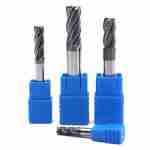
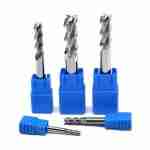
Products Pictures


Available Size:
| NO. | Order product No. | D (mm) | Handle D. (mm) | Cutting Length (mm) | Total Length (mm) | Flutes (Z) |
|---|---|---|---|---|---|---|
| 1 | NCG-4EL-D3.0 | 3 | 6 | 12 | 75 | 4 |
| 2 | NCG-4EL-D4.0 | 4 | 6 | 15 | 75 | 4 |
| 3 | NCG-4EL-D5.0 | 5 | 6 | 20 | 75 | 4 |
| 4 | NCG-4EL-D6.0 | 6 | 6 | 20 | 75 | 4 |
| 5 | NCG-4EL-D8.0 | 8 | 8 | 25 | 100 | 4 |
| 6 | NCG-4EL-D10.0 | 10 | 10 | 30 | 100 | 4 |
| 7 | NCG-4EL-D12.0 | 12 | 12 | 35 | 100 | 4 |
| 8 | NCG-4EL-D14.0 | 14 | 14 | 40 | 100 | 4 |
| 9 | NCG-4EL-D16.0 | 16 | 16 | 50 | 150 | 4 |
| 10 | NCG-4EL-D20.0 | 20 | 20 | 55 | 150 | 4 |
* Non-standard sizes available upon request. Contact us for custom specifications,We will feedback to you within 24 Hours.
Key Features and Construction of Long Flute Carbide End Mills
The Long Flute Carbide End Mill uses a fine‑grain solid carbide substrate to provide high bending strength and wear resistance under long overhang conditions. A TiAlN coating improves heat resistance and flank wear control in continuous side milling, especially when machining steels and cast irons at higher cutting speeds. The helix angle above 45° reduces cutting forces and promotes smoother chip flow along the flute, which is critical when a large portion of the cutting edge is engaged in deep cavities. With a controlled diameter tolerance of D: 0/-0.020, the tool supports stable dimensional accuracy for square slots, steps, and side walls even when flute engagement is long.
For users comparing tool body materials and coatings, our manufacturing capabilities for fine‑grain cemented carbide are also detailed in the cemented carbide material guide, which explains how substrate and coating combinations influence tool life and surface finish in long reach applications.
Geometry Stability and Recommended Operations
The extended flute length gives you the reach needed for deep cavity machining while the core geometry is optimized to resist deflection and chatter. In most applications, a four‑flute configuration is recommended for balanced chip load and surface finish, although the effective axial depth of cut should be matched to the flute length instead of attempting to mill with the entire flute in one pass. Using a rigid holder, minimizing tool overhang, and applying progressive step‑downs help this long flute design behave predictably, even when the reach approaches the limits of your machine envelope.
If you are evaluating different flute counts or corner designs for side milling, you can refer to our dedicated 4 flute end mill for steel slotting and corner radius end mill pages for more details on geometry trade‑offs in deep and semi‑deep features.
Application Range and Compatible Materials
Deep Walls, Slots, and Steps
This tool is particularly effective in side milling of deep walls where axial depth of cut is large and access is limited by part geometry or fixturing. In square slotting, the long flute allows you to finish the full depth of the slot with fewer tool changes, while still holding straight walls from top to bottom. For step machining, it can cut multiple step heights in a single setup, which helps reduce re‑clamping errors and improves relative dimension control between levels in mold bases, die plates, and structural components.
Material Suitability and Long Reach Applications
The Long Flute Carbide End Mill is best suited for carbon steels and alloy steels up to about 45 HRC, where it can combine meaningful material removal with acceptable tool life in deep features. It also performs well in common pre‑hardened and hardened mold steels around 45 HRC, as well as gray cast iron and ductile iron used in machine bases, housings, and heavy components. With conservative cutting parameters, it can be applied to harder materials up to roughly 50 HRC and selected stainless steels, provided that vibration is controlled and coolant delivery is sufficient.
For aluminum housings or structural parts with deep pockets and long walls, this design can be used in a similar way to solid carbide end mills for aluminum, serving as Long Reach End Mills for aluminum when paired with higher spindle speeds, light radial engagement, and strong chip evacuation in deep pockets and thin walls.
When machining hardened steels or heat‑treated components at higher hardness levels, please also refer to our hardened steel end mill solutions to align long flute tool selection with suitable roughing and finishing strategies.
Applicability for Materials
◎ = Perfect for ○ = Suit — = N/A
| Carbon Steel | Alloy Steel | Pre-hardened Steel / Hardened Steel | Stainless Steel | Cast Iron / Nodular Cast Iron | Copper Alloy | Aluminium Alloy | Titanium Alloy | Heat-resistant Alloy | |||
|---|---|---|---|---|---|---|---|---|---|---|---|
| ~45HRC | ~50HRC | ~55HRC | ~68HRC | ||||||||
| ◎ | ◎ | ◎ | ○ | — | — | ○ | ◎ | — | — | — | — |
Selection Guide for Long Flute Carbide End Mills
Choosing the right Long Flute Carbide End Mill starts with defining the workpiece material, hardness level, and the type of operation you plan to run. For deep cavity machining in carbon steel and alloy steel, a TiAlN‑coated long flute design with a helix angle above 45° is typically the most balanced option. When the primary work involves mold cavities, ribs, and cores in pre‑hardened or hardened steels, you are effectively looking for Long Reach End Mills for mold that can maintain stability in narrow and deep features. For aluminum housings or structural parts with deep pockets and long walls, the same body can be used as Long Reach End Mills for aluminum or as a Long Flute Carbide End Mill for aluminum by adjusting cutting data to favor higher spindle speeds, lighter radial engagement, and excellent chip evacuation.
If you are still comparing different flute geometries and coating options for a broader range of jobs, our carbide end mill selection guide and how to choose and buy carbide end mill articles provide additional checklists and selection flowcharts you can apply directly to long flute tools.
Diameter, Flute Length, Overhang, and Cutting Parameters
Once materials and operations are clear, select a tool diameter that closely matches the required slot width, wall spacing, or minimum corner radius. Oversizing the diameter increases deflection and the risk of chatter in long reaches, especially in harder materials. The flute length should cover the maximum effective axial depth of cut, but extending it significantly beyond what is needed offers no benefit and reduces stiffness. Tool overhang from the holder should be kept as short as practical while still clearing fixtures and workpiece features; each millimeter of unnecessary overhang makes deflection and vibration more likely.
For steels and cast irons, a conservative starting point is to use moderate axial depth with small to medium radial engagement, then adjust feed per tooth and spindle speed based on vibration, sound, and chip color. In hardened steels around 45 HRC, incremental step‑downs and lower radial engagement reduce load on the long flute and help avoid chipping at the cutting edge. When working with tougher pre‑hardened steels approaching 50 HRC or stainless steels, it is better to treat the process as semi‑finishing rather than heavy roughing, focusing on stability and repeatable tool life instead of maximum metal removal rate.
For more detailed feeds and speeds suggestions by hardness band and tool diameter, you can cross‑reference the recommendations in our machining hardened steel guide and tungsten carbide tool life article, then adjust as needed for the additional overhang of long flute tools.
Buying Considerations and Supplier Evaluation
Before placing an order, confirm that the supplier can consistently meet the D: 0/-0.020 diameter tolerance and that their grinding quality is stable from batch to batch. It is also important to verify which carbide grades and TiAlN coatings are actually used, especially if the tools will be applied in hardened steels or high‑duty mold and die work. If you source from a Long Reach End Mills factory in China, ask for recommended cutting parameters by material and hardness, and check whether they can maintain long‑term stock for your key diameters and flute lengths. A supplier able to provide technical support in English, share basic test data, and document their quality controls will usually make it easier to troubleshoot any issues that arise in deep cavity and long reach machining.
To evaluate suppliers systematically, you can follow the checklist in our carbide tool supplier evaluation guide, which covers audit points for raw materials, grinding equipment, in‑process inspection, and stock management.
If you need to confirm OEM or private label capabilities for long flute and long reach geometries, the OEM carbide tools guide explains how to define drawings, tolerances, and coating requirements when working with a carbide end mill manufacturer.
Talk to a Long Reach Tooling Specialist
If you are currently struggling with chatter, premature wear, or inconsistent dimensions in deep walls and slots, reviewing your long flute tooling strategy can be one of the fastest ways to stabilize your process. Collect key information such as material grade, hardness, maximum cavity depth, tool overhang, and machine type, and share it with our technical team so we can recommend a combination of Long Flute Carbide End Mills, Long Reach End Mills for steel, and Long Reach End Mills for aluminum that fits your production mix. You can reach us directly through the contact us page or leave a message via the online inquiry form for a tailored quotation and cutting recommendation.
Failure Case: Deep Slot Chatter and Breakage
A mold shop attempted to cut a deep square slot in alloy steel using a single Extra Long End Mill, engaging nearly the entire flute length with heavy radial width and a feed rate similar to their standard length tools. As the cutter advanced, the long overhang led to increasing deflection and vibration, which showed up as loud chatter and visible waviness on the slot walls. Chip color shifted from bright to dark, indicating excessive heat, and within a short time the cutting edges experienced accelerated wear and eventually broke before the slot could be completed. After analyzing the failure, the shop changed the process to rough most of the material with shorter, stiffer tools and then finish the full depth with a Long Flute Carbide End Mill using smaller radial engagement, shorter step‑downs, and reduced overhang.
For engineers who want more background on tool selection and process planning to avoid similar failures, our carbide tool productivity strategies and extend carbide tool life guide summarize practical methods to balance tool life, stability, and overall machining cost per part.
Packaging & Delivery
| Packaging | Individual plastic tube + foam box |
| Port | Shenzhen / Guangzhou /Shanghai |
| Lead Time | 3–5 days (in-stock) / 7–30 days (custom) |
| Shipping | DHL / FedEx / UPS / Sea freight |
FAQs
Q: When should I choose a Long Flute Carbide End Mill instead of a standard length end mill?
A: Choose it when cavity depth, wall height, or slot length exceeds the safe reach of a standard tool and you still need accurate walls and consistent surface finish.
Q: How can I reduce chatter and deflection when using a Long Flute Carbide End Mill in deep cavities?
A: Minimize tool overhang, use smaller radial engagement and step‑downs, ensure rigid fixturing, then fine‑tune feed and speed based on vibration and chip behavior
Q:What materials are best suited for this Long Flute Carbide End Mill?
A:It suits carbon steel, alloy steel, pre‑hardened and hardened steels around 45 HRC, and cast or ductile iron, with secondary use in higher hardness steels and selected stainless steels.
A VISIBLE QUALITY. YOU CAN BE TRUSTED.
01
Please confirm the tool size, coating type, and material compatibility before placing an order.
02
Carbide end mills are fragile – avoid impact and store them in a dry, secure place.
03
Ensure proper cutting parameters (speed, feed, depth) for best performance and tool life.
04
Wear safety protection (goggles, gloves) when operating cutting tools.
05
If you’re not sure which type to choose, feel free to contact us for professional recommendations.
Purchase Information
After-sales Support: We offer technical guidance and quick response for any product or usage concerns.
MOQ & Customization: Most models are in stock. Custom logo, size, or packaging is available – please consult before ordering.
Shipping: We support express, air, and sea shipping. Delivery time may vary by region and quantity.
Quality Assurance: All tools are inspected before shipment. We provide SGS and ISO certificates upon request.
Returns & Warranty: Defective or damaged products due to manufacturing issues can be replaced.
Shipping Terms
If you have any special requirements on packing, please contact us for shipping cost and lead time. See our general Shipping & Return Policy for details.
Long Flute Carbide End Mill for Deep Cavity, Long Reach Machining

Long Flute Carbide End Mills engineered for deep cavities, tall walls, and mold cores in steel and aluminum, with TiAlN coating and stable long‑reach performance
Product SKU: JYC-NCG-4EL-D6-20
Product Brand: JYC Carbide
Product Currency: USD
Product Price: 8
Price Valid Until: 2036-12-12
Product In-Stock: InStock
4.85



Request a Quote for Carbide Tools