Author: CNC tooling engineer (OEM and private-label projects) Reviewed by: Industrial purchasing manager, JYC Carbide Last updated: May 2026
Many cutting tool brands do not manufacture every tool themselves from scratch. They work with experienced factories on OEM or private‑label programs and focus their own effort on branding, channels, and service. If you are considering launching your own carbide cutting tool brand, the real question is not how fast you can get high margins, but whether you can secure a factory with stable processes, a clear product structure, and reliable communication to support your positioning over the long term; the overview of OEM carbide tool solutions and sustainable carbide tool strategies can help you see how a manufacturing partner fits into a long‑term brand plan.


1. What Are OEM Carbide Cutting Tools?
Roles of factory and brand
In an OEM carbide cutting tool program, a professional factory handles design and production, while you take care of branding, packaging, channels, and after‑sales.
In practice, this usually means:
- Tool geometry, coating, and substrate are produced by the factory based on existing standards or agreed‑upon specifications.
- Tool markings can follow your brand system, for example laser logos, color rings, and product codes.
- Packaging, inserts, and labels use your brand’s visual identity and language.
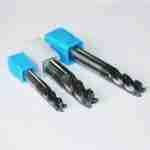
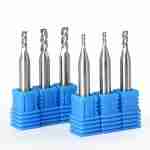
For the end user, what they see is your brand and your service model. For you, the OEM factory provides the process capability and capacity behind that brand; if you want to understand the factory’s broader carbide portfolio, the carbide end mills and carbide drill product lines are a good starting point to map their standard ranges to your future private‑label offering.
2. Materials and Applications OEM Carbide Tools Can Cover
Typical materials and limits
From a technical point of view, a mature OEM carbide tool portfolio can usually cover the following common applications, as long as the specific series and parameters are selected correctly:
- General structural steels and mold steels (for example 4140, P20, NAK80, S136, typically up to about HRC48 for routine work).
- Common stainless steels (for example 303, 304, 316, 420, 17‑4PH).
- Aluminum alloys (such as 6061, 7075, ADC12 and other die‑cast or forged grades).
- Gray cast iron, ductile iron, and some wear‑resistant cast materials.
- Copper, brass, bronze, and other non‑ferrous metals.
- Certain pre‑hardened mold steels and moderately hardened steels, for semi‑finishing and finishing within reasonable parameter ranges.
- Titanium alloys and other difficult materials, usually with dedicated coatings and geometries and only after small‑batch trials.
A few points are worth stating clearly:
- There is no single carbide tool series that covers every material and every operation without compromise.
- Stainless, high‑hardness steels, titanium, and high‑temperature alloys usually require their own series and parameter windows.
- In an OEM discussion, you should clarify early which materials are suitable for standard series and which need dedicated designs or testing; if hardened steels are an important part of your market, the machining hardened steel application guide offers additional context on series choice and parameter ranges in higher HRC zones.
3. Where OEM Carbide Tools Make Sense for Your Brand
Channel models that fit OEM
OEM carbide tools can work in several different channel models, for example:
- Private‑label end mills, drills, and sets on e‑commerce platforms.
- Regional distributor brands targeted at small and mid‑size machine shops.
- In‑house “shop brands” at mold shops or component plants to distinguish internal tool sources.
- Own‑label lines for hardware chains or local tool stores, with stable specifications behind the brand.
For these scenarios, OEM brings value mainly in three areas:
- You can choose focused series based on your customer mix, such as aluminum end mills, stainless‑specific tools, or mold‑steel lines, instead of selling a random general‑purpose assortment.
- You can align packaging, markings, and data sheets under one brand identity so customers have a consistent experience when purchasing and using your tools.
- With consistent quality and realistic pricing, you have room to design your own margin structure through bundling, service, and channel strategy.
All of this depends on one foundation: you understand your target customers, their main materials, and typical operations, rather than doing private label only because it looks profitable; if you want to compare how different applications affect the required product mix, the CNC machining application pages give practical examples across mold, automotive, aerospace, and general machining work.
4. What to Look at When Choosing an OEM Factory
Technical and operational checkpoints
Compared with simple trading, an OEM cutting tool relationship is closer to a long‑term partnership. It helps to look at at least the following aspects:
- Technical base – does the factory have a stable carbide rod and coating supply chain, and well‑defined series for steels, stainless steels, aluminum, high‑hardness steels, and other key material groups?
- Equipment and inspection – do they use stable 5‑axis CNC tool grinders and appropriate inspection equipment for dimensions and runout (TIR), and can they provide basic inspection reports for dimensions, runout, and appearance?
- Specifications and data support – is there a complete list of sizes, selection guidelines, and basic parameter ranges (Vc, fz, ap, ae) with material recommendations, and are they willing to help turn this into your brand’s catalog or data sheets?
- Communication and delivery – is there a consistent contact person who understands both the technical side and your channel needs, and are MOQ and lead time for OEM logos, color codes, and packaging clearly stated and realistic?
These factors often decide whether your brand can run steadily, more than any single unit price difference.
5. A More Realistic View on Cost, Margin, and MOQ
How to think about economics
Many people look at OEM hoping for better margins, which is understandable. From experience, a more robust way to think about it is:
- Treat OEM as a way to gain cost control and consistent quality, not as a guarantee of a specific margin percentage.
- Remember that gross margin depends on platform fees, advertising, storage and logistics, returns, and after‑sales support, not only on purchase price.
- Expect an OEM factory to work with you on cost within a reasonable range, but not to promise fixed profit multiples.
Regarding MOQ and lead time:
- A common pattern is to start with existing standard products for small trial orders, then move to branded versions once performance is confirmed.
- OEM logo and packaging usually have higher MOQs than standard stock items, so the exact quantity should be confirmed at RFQ stage.
- Lead times depend on production load, customization details, and logistics, and are best managed with an estimated range plus confirmation at order rather than fixed public promises.
6. Common Pitfalls When Starting an OEM Carbide Tool Brand
Issues worth addressing early
Based on industry experience, several issues tend to cause trouble if they are not addressed early:
- Focusing only on unit price, not on consistency – a low unit price with large batch‑to‑batch variation will show up quickly as higher returns and negative feedback, especially on e‑commerce platforms.
- Ignoring material and application matching – using one general‑purpose series for everything may work for a short time, but difficult materials will expose the limits quickly, so it is safer to define separate series for stainless, high‑hardness, titanium, and similar materials.
- Talking only about labels, not about technical details – if you do not discuss typical materials, machine types, and holding conditions with the factory up front, you may end up repeatedly changing series and inventory later.
- Underestimating after‑sales and technical support – in an OEM model, end users come to you, so you need basic selection charts, parameter ranges, and answers to common questions; the articles inside the carbide technical hub and cutting tools insights can gradually supplement your own documentation and FAQs.
7. When to Involve a Tooling Engineer in OEM Planning
Scenarios where expert input helps
You will usually get better outcomes from your OEM program if you bring a tooling engineer into the discussion in the following cases:
- You already have a stable customer base and want to launch your own tool brand to replace or supplement current suppliers.
- Your customers work on several material families, such as mold steels plus stainless plus aluminum, and you want a clear series and selection logic.
- You plan to launch end mill or drill sets on e‑commerce platforms and need to align tool sets with user skill levels, use conditions, and after‑sales expectations.
- You want to use a more systematic product structure and packaging to upgrade your brand image and average order value.
When you reach out, it helps to prepare:
- Main industries and typical materials your customers machine, for example mold shops mainly using P20, NAK80, and S136.
- Current problems, such as unstable tool life, frequent chipping, or difficulty holding width or hole tolerances.
- An approximate annual demand range, and the MOQ and delivery rhythm you can realistically work with.
With these details, an engineer can suggest more suitable series combinations, sampling plans, and starting parameter ranges, instead of just handing you a generic price list.
Send Your OEM and RFQ Details
We will review your materials, applications, and volume plans and provide OEM suggestions tailored to your machining conditions and channel model, rather than a one‑size‑fits‑all offer.
FAQs
What are OEM carbide cutting tools?
OEM carbide tools are manufactured by a specialist factory but sold under your own brand, with custom markings and packaging that fit your sales channel.
Which materials can an OEM carbide tool line usually cover?
Most OEM carbide lines can cover steels, stainless steels, aluminum, cast iron, and non‑ferrous metals, with separate series needed for hardened steels or titanium.
Is OEM carbide tooling only suitable for large brands?
No. OEM can work for regional distributors, e‑commerce brands, and in‑house shop brands, as long as volumes, MOQ, and product scope are planned realistically.
About This OEM Carbide Tools Article
This article is written from a practical OEM and sourcing perspective for CNC machinists, process engineers, and procurement managers considering a private‑label carbide tool program. It is reviewed periodically to stay aligned with current material mixes, channel models, and feedback from industrial buyers.


Request a Quote for Carbide Tools