An ISO 10911 carbide end mill is a solid hardmetal end mill with a cylindrical shank whose dimensions are referenced against ISO 10911:2017, the current international dimensional standard for this tool category. It gives manufacturers and buyers a common dimensional reference, but it is not a certification, a performance grade, or a complete purchasing specification. Buyers must still confirm the exact cutting diameter, shank diameter, cutting length, overall length, end geometry, tolerance, coating, workpiece material, and inspection requirements.
The current ISO catalogue lists ISO 10911:2017 as the third edition, published in June 2017. Its public scope states that it specifies dimensions for solid hardmetal end mills with cylindrical shanks. Because the official standard is copyrighted, this guide explains how to reference an ISO 10911 carbide end mill in sourcing and specification work.
Why an ISO 10911 Carbide End Mill Needs a Dimensional Standard
A carbide end mill is not defined by cutting diameter alone. Two types of milling cutters with the same nominal diameter may have different shank diameters, cutting lengths, overall lengths, reaches, or transitions between the cutting section and the shank. Those differences affect holder compatibility, feature access, rigidity, tool projection, and whether the tool fits an existing program or tool-management record.
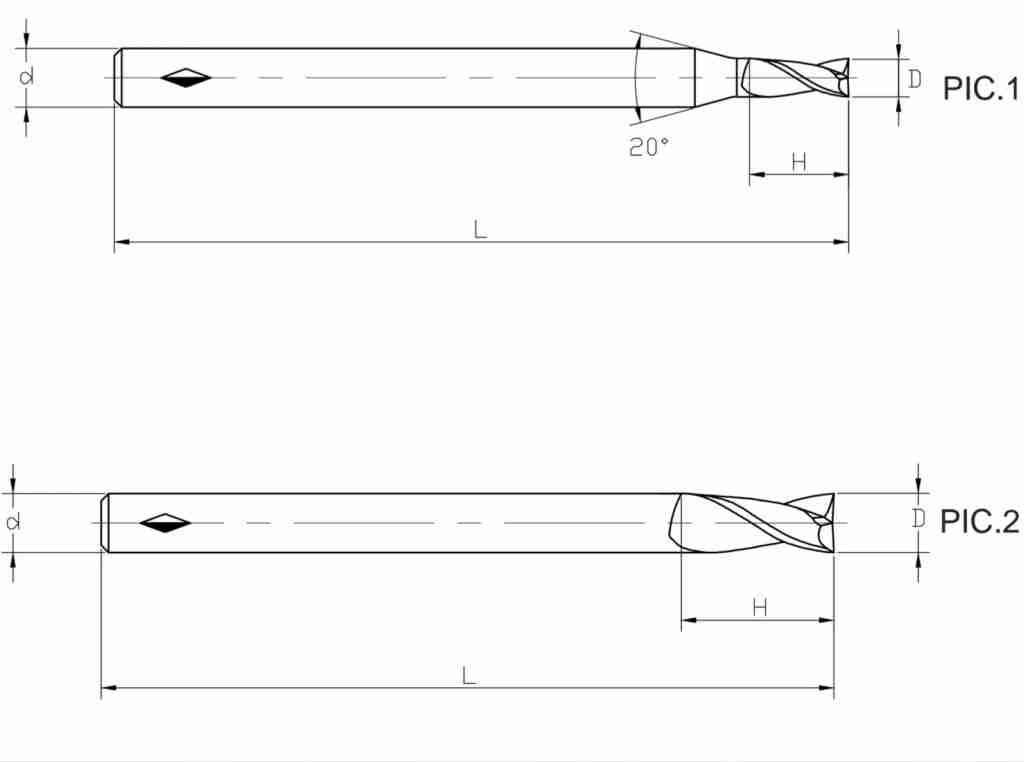
For procurement teams and distributors, referencing an ISO 10911 carbide end mill against a shared standard helps create a common reference between the drawing, catalogue, quotation, inspection record, and delivered tool. It reduces ambiguity, but it does not replace the purchase specification. See our guide on how to find a reliable carbide cutting tool supplier in China for a broader sourcing checklist.
What ISO 10911 Does Not Prove
- ISO certification of the manufacturer or product
- A particular carbide grade, coating, flute count, or helix angle
- Suitability for a specific workpiece material
- Guaranteed tool life, surface finish, or cutting performance
- Compliance of every end mill in a supplier’s catalogue
- Conformity of an unchecked custom length or special geometry
ISO 10911 Carbide End Mill: Scope and Dimensional Reference
The official ISO title is Solid hardmetal end mills with cylindrical shank — Dimensions. The standard is a dimensional reference for a defined category of solid hardmetal end mills. An ISO 10911 carbide end mill should not be treated as a general standard for all milling cutters, all shank forms, or every solid-carbide end-mill geometry.
- Tool category: Is the item a solid hardmetal end mill within the standard’s scope?
- Shank form: Does the tool use the cylindrical-shank configuration addressed by the standard?
- Dimensional configuration: Do the requested dimensions correspond to the applicable standard configuration, or is part of the tool custom?
End Mill Dimension Terminology for an RFQ
| RFQ field | What the buyer should specify | Why it matters |
|---|---|---|
| Cutting diameter, D | Nominal diameter and required tolerance | Controls the machined feature and stock allowance |
| Shank diameter | Nominal shank size and required fit | Determines holder compatibility |
| Cutting length | Length of the cutting section | Determines usable axial engagement |
| Overall length | Total tool length | Affects reach, projection, and machine clearance |
| Flute count | Required number of cutting edges | Affects chip space and application suitability |
| End geometry | Square, corner radius, ball nose, or another approved form | Defines the generated feature and corner condition — see our corner radius end mill and ball nose end mill ranges |
| Helix angle | Required value, when application-specific | Influences cutting action and chip evacuation |
| Workpiece | Material grade and hardness | Required for selecting the product series, e.g. hardened steel machining or titanium machining |
| Inspection | Dimensions to report and document format | Establishes the acceptance record |
Relevant Solid Carbide End Mills in Our Current Catalogue
Our controlled carbide end mill catalogue includes several square-end-mill families with cylindrical shanks that fall under the ISO 10911 carbide end mill category. The ranges below are company catalogue data for quotation review. They are not a copy of ISO 10911 and do not by themselves declare conformity to the standard.
| Catalogue family | Verified catalogue range | Configuration |
|---|---|---|
| NCG 2-flute square end mill | D1.0–D20.0 mm | Standard length |
| NCG 4-flute square end mill | D1.0–D20.0 mm | Standard length |
| NCG 4-flute long-reach square end mill | D3.0–D20.0 mm | Extended length |
| NCP variable-pitch 2-flute square end mill | D1.0–D20.0 mm | Standard length |
| NCP variable-pitch 4-flute square end mill | D1.0–D20.0 mm | Standard length |
| NCP variable-pitch 4-flute long-reach square end mill | D3.0–D20.0 mm | Extended length |
| NCPX 4-flute square end mill | D3.0–D20.0 mm | Standard or long-reach catalogue forms |
Buyers can review the current 2-flute square end mill, 4-flute carbide end mill, and long-reach solid carbide end mill pages before requesting confirmation. Availability, exact dimensions, coating, and the quoted specification must be confirmed for the order. A tool should be described as ISO 10911-based or ISO 10911-conforming only after its applicable dimensions have been checked against the official standard and the approved product drawing.
ISO 10911 vs DIN 6527
| Point | ISO 10911:2017 | DIN 6527:2002-01 |
|---|---|---|
| Standards body | International Organization for Standardization | DIN, the German standards organization |
| Official subject | Solid hardmetal end mills with cylindrical shank | Solid hardmetal end mills with stepped parallel shank |
| Purchasing use | Reference for the applicable cylindrical-shank category | Reference for the applicable stepped-shank category |
| Interchangeable? | No; confirm the applicable scope and configuration, and the stepped-shank requirement, before quoting | |
For a companion deep-dive on drill-specific dimensional standards, see our guide to DIN 6537 and DIN 6535-HA, which covers the working end and shank-end standards for solid carbide twist drills.
Standard Dimensions vs Custom Lengths
A custom cutting length, overall length, neck, reach, or diameter may be feasible even when it falls outside a standard catalogue configuration. Identify the standard reference and list every custom dimension on the drawing. For a fully custom configuration, control the tool through the buyer-approved drawing and inspection requirements without implying full conformity to a standard configuration. Our OEM carbide tools guide covers this custom-drawing workflow in more detail.
Long-reach tools require particular care because additional projection can reduce rigidity — see our notes on how to extend carbide end mill life under extended-reach conditions. The quotation should distinguish cutting length, reach, shank length, and overall length rather than using the word “long” without dimensions.
How to Confirm an ISO 10911 Carbide End Mill Before Ordering
- Confirm that the tool category and shank form fall within the intended standard scope.
- State the cutting diameter, shank diameter, cutting length, and overall length.
- Identify the required end geometry; do not assume one standard covers every form.
- Provide the workpiece material, grade, hardness, and operation.
- State flute count, coating, and helix requirements separately.
- Mark every custom dimension clearly on the drawing.
- Agree on which dimensions require an inspection record or certificate of conformity to the approved purchase specification.
For a step-by-step walkthrough of this process, see how to choose and buy a carbide end mill and our broader carbide tool supplier evaluation checklist.
Frequently Asked Questions
Which end mills are covered by ISO 10911?
The official scope identifies solid hardmetal end mills with cylindrical shanks and states that the standard specifies their dimensions. Do not assume that every carbide milling cutter, shank form, or end geometry is included. Check the current official standard and the exact tool drawing before making a conformity statement.
Does ISO 10911 define flute geometry?
ISO’s public description presents ISO 10911 as a dimensional standard. A buyer should not use the standard number alone to specify flute count, helix angle, edge preparation, coating, carbide grade, or application performance. Put those requirements separately on the RFQ, drawing, or approved product specification.
How does ISO 10911 differ from DIN 6527?
The current official titles distinguish a cylindrical-shank scope for an ISO 10911 carbide end mill from a stepped parallel-shank scope for DIN 6527 (see our DIN 6537 and DIN 6535-HA guide for the related drill standards). They should not be treated as interchangeable references. Select the standard that matches the actual tool configuration.
Can micro end mills follow ISO 10911?
The word “micro” does not automatically establish conformity. A micro end mill can be assessed only by checking whether its tool category, shank form, and dimensions fall within the applicable scope. Otherwise, control it through a complete drawing and agreed inspection criteria.
Can a non-standard flute length be combined with an ISO-sized shank?
It may be possible to combine a standard-reference shank dimension with a custom cutting length, but the result should be described accurately. Mark the custom length on the drawing and avoid calling the entire tool standard unless all applicable dimensions have been checked.
More background on standards terminology is available in our carbide standards & specifications FAQ hub and our machining knowledge section of the Carbide Technical Hub.
Request a Dimensional Review
Send the required end-mill type, catalogue model if known, cutting diameter, shank diameter, cutting length, overall length, workpiece material, quantity, and delivery destination. We will review the available catalogue specification and confirm what can be quoted for your ISO 10911 carbide end mill requirement. For a non-standard tool, include a dimensioned drawing so the custom scope can be evaluated separately.
Authoritative References
- ISO 10911:2017 official catalogue record — International Organization for Standardization
- DIN 6527 official DIN Media record — DIN Media GmbH


Request a Quote for Carbide Tools