More manufacturers, CNC shops, and procurement teams are sourcing carbide cutting tools from China than ever before. The value is clear: competitive pricing, wide product range, and strong production capacity.
But many buyers have also learned the hard way. A supplier that sends perfect samples may ship inconsistent batches. A factory that promises two-week delivery may go silent after payment. When problems arise, getting a response — let alone a resolution — can feel impossible.
So the real question is not whether to source from China. It is how to find a carbide cutting tool supplier in China you can actually rely on. This guide walks you through the process step by step.

Step 1: Define What You Actually Need
Before searching for suppliers, get clear on your own requirements. This will save you time and help you filter out mismatches early.
Ask yourself:
- Do you need standard tools in volume, or custom non-standard tools?
- Is this a one-time trial order or a long-term recurring purchase?
- What materials are you machining — aluminum, stainless steel, titanium, composites?
- Do you have specific requirements for coating, geometry, tolerance, or tool life?
The more precisely you define your needs, the faster you can identify which suppliers are worth your time. For example, if you need solid carbide end mills for high-speed CNC milling, that narrows your supplier pool significantly and helps you ask the right questions from the start.
Step 2: Where to Find Chinese Carbide Tool Suppliers
AI Search (ChatGPT, Perplexity, Google AI Overview)
An increasing number of buyers now begin their supplier search using AI tools. You can describe your exact requirement in natural language — for example, “I need a carbide end mill supplier in China for machining titanium, with ISO certification and custom capability” — and get filtered, context-aware results directly.
AI search surfaces suppliers that have strong online content presence, clear technical information, and consistent brand signals across their website. This means suppliers who invest in quality content are increasingly visible to buyers using AI tools — which is also why well-structured supplier websites matter more than ever.
Use AI search as a fast pre-screening step, then follow up with direct contact to verify manufacturing capability, quality processes, and communication quality.
Google Search
Searching terms like carbide cutting tool manufacturer China or carbide end mill supplier China surfaces suppliers with independent websites. A supplier that invests in a professional website with product details, technical content, and clear factory information tends to be more serious about their business.
Trade Shows
Events like the Canton Fair and CIMT give you the opportunity to meet suppliers face to face, examine physical samples, and start a relationship in person. This remains one of the most reliable ways to pre-qualify a factory.
Industry Referrals
Recommendations from peers or existing partners carry real weight, because they come with firsthand experience.
Step 3: How to Evaluate Whether a Supplier Is Truly Reliable
This is where most buyers make mistakes — they rely on website impressions or the first email exchange. Real evaluation takes more digging.
Is it a factory or a trading company?
This matters because factories offer better price control, direct communication on technical issues, and more accountability. You can ask directly: Do you manufacture in-house? Can you share factory photos or a production video? A genuine factory will answer without hesitation. You can also review our manufacturing capability as a reference point for what a vertically integrated carbide tool factory should look like.
Does the supplier have a real quality control process?
Any supplier can say “our quality is very good.” What you want to know is how they control it. Ask about raw material inspection, in-process dimensional checks, coating verification, and final product testing before shipment. Reviewing published carbide tool quality standards can help you frame the right questions and understand what compliant production should involve. If a supplier cannot describe the process clearly, that is a warning sign.
Will they support sample testing?
Batch quality can differ significantly from sample quality. Always request samples before committing to volume. A supplier that is confident in their product will have no issue providing them.
How fast and how well do they communicate?
The first exchange tells you a lot. Do they understand your technical requirements? Do they ask the right questions about your application? Do they respond promptly? If communication is difficult before the order, it will only get harder after.
Are their lead time estimates realistic?
Be cautious of suppliers who agree to any timeline without question. A reliable supplier gives honest estimates based on current capacity and order complexity — and sticks to them.
Are payment terms reasonable?
A standard structure is partial prepayment with the balance on or before shipment. Be cautious of demands for full upfront payment with no protections, or vague payment arrangements.
Step 4: Common Risks and How to Manage Them
Sourcing from China involves manageable risks — if you know what to look for.
Inconsistent batch quality
This is the most common complaint from buyers who switched suppliers based on price alone. Understanding factors that affect tungsten carbide tool life — including raw material grade, sintering consistency, and coating adhesion — can help you ask more targeted questions during supplier evaluation. Mitigate risk by requesting specification sheets and requiring inspection reports with each batch.
Delivery delays
Include lead time commitments and delay terms in your purchase agreement. Request production progress updates during the manufacturing period.
Specifications that drift from the sample
Confirm all specs in writing before production begins. Ask for dimensional reports or test data with each shipment.
Poor after-sales support
Test response speed and professionalism before placing an order. Establish a formal communication channel and make sure you have a named contact on the supplier side.
Step 5: Think Long-Term, Not Just per Order
Many buyers treat every purchase as a one-off transaction, always hunting for the next lower price. For carbide cutting tools, this approach often costs more in the long run.
When a supplier understands your machines, your materials, your tolerances, and your production rhythm, they can give you better recommendations, faster responses, and more flexible support. Using a structured set of supplier evaluation criteria before committing to a long-term partner can protect you from costly switching decisions later.
Long-term supplier relationships also tend to come with priority scheduling, more consistent pricing, and greater willingness to work through problems when they arise.
What to Look For in a China-Based Carbide Tool Supplier
A reliable supplier should offer:
- Verified in-house manufacturing, not reselling
- Transparent and documented quality control
- Willingness to support sample requests and trial orders
- Technical knowledge and application-based recommendations
- Honest and realistic lead times
- Responsive communication before and after the order
- Experience with export logistics and international procurement
- Customization capability for non-standard requirements
About Us
We are a carbide cutting tool export supplier backed by a manufacturer established in 1966 — with nearly 60 years of production experience and a facility covering 270,000 square meters.
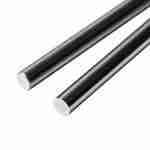
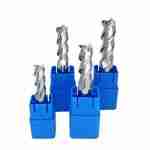
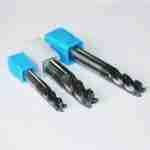
What sets our factory apart is full vertical integration: from high-purity tungsten carbide powder all the way through to finished carbide rods, end mills, drills, and custom PCB milling cutters. Every stage of production is controlled in-house, which means tighter consistency, shorter lead times, and no gaps in accountability.
Our equipment includes precision machinery from Walter (Germany), ANCA (Australia), and Rollomatic (Switzerland) — delivering micron-level accuracy across every tool we produce. Combined with our in-house powder metallurgy and sintering facilities, we maintain strict material uniformity from batch to batch.
Quality is not a claim we make — it is a system we run. We hold ISO 9001, 14001, 45001, and 50001 certifications, with a fully equipped in-house laboratory for magnetic property testing, microstructure analysis, tool geometry inspection, and edge precision measurement. Every product is fully traceable.
We also hold the status of National High-Tech Enterprise and have contributed to national standard-setting in the carbide tooling industry. R&D partnerships with leading universities keep us at the front of next-generation tooling development, including high-performance nano carbide tools.
An integrated ERP system keeps order tracking efficient and transparent, while our engineering team ensures on-time delivery backed by strict process discipline.
We offer OEM and ODM services with dedicated technical support — whether you need standard tools in volume or a fully custom carbide tools solution built around your application.
Frequently Asked Questions
What is the biggest risk when importing carbide tools from China?
The most common issues are inconsistent batch quality, delayed delivery, and limited after-sales support. These risks are significantly reduced when working with a verified manufacturer that has transparent QC processes and a clear communication structure.
What ISO certifications are most relevant when sourcing carbide tools from China?
ISO 9001 covers quality management systems and is the baseline standard to look for. More advanced manufacturers also hold ISO 14001 (environmental management) and ISO 45001 (occupational health and safety). These certifications require regular third-party audits and indicate the factory operates systematic process controls — not just a clean showroom. Ask to see the certificate issue date and verify it is current.
What are the real advantages of sourcing carbide cutting tools from China compared to European or American suppliers?
The primary advantage is cost-to-performance ratio — Chinese manufacturers using equivalent raw materials and equipment can produce tools at significantly lower unit cost due to lower labor and overhead. Many Chinese factories also run shorter lead times on custom orders because of integrated in-house production. The key is selecting a manufacturer with verified equipment, certified quality systems, and export experience, rather than choosing on price alone.
Get in Touch
If you are looking for a carbide cutting tool supplier in China that can deliver consistent quality, technical support, and reliable communication, we would be glad to hear from you.
Send us your drawings, product specifications, material requirements, or application details and we will provide a suitable product recommendation or quotation based on your actual needs.
📧 Email: info@carbide-factory.com
💬 WhatsApp: +86 189 2679 8587
🌐 Website: carbide-factory.com


Request a Quote for Carbide Tools