Author: JYC Carbide Application & Product Team Technical Review: Senior process engineers (hard milling, mold & die) Last updated: May 2026
This guide is for CNC shops that use, or are planning to use, solid carbide tool for hardened steel, mold steels and other difficult materials. It explains what changes when you move from HSS to solid carbide, what carbide can realistically do up to around HRC65, and what usually kills tool life long before the catalog suggests it should.


All examples and data points are based on JYC Carbide internal applications and customer feedback. They are for engineering discussion and initial parameter planning only. Final cutting data must be set and validated by your team on your machines, with your workholding and parts.
1. Solid Carbide Is Not “Regular Steel”
In machining, “tungsten steel” usually means cemented carbide: tungsten carbide (WC) hard particles bonded with cobalt, sintered at roughly 1400–1500℃ under pressure. Typical solid carbide cutting grades come in around 89–93 HRA and keep useful hardness and hot strength at much higher temperatures than HSS, which is why they are used for hardened steels, stainless and heat‑resistant alloys.
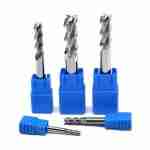
In moldmaking, precision parts and aerospace work, the right solid carbide end mill can cut heat‑treated steels at higher cutting speeds than HSS and, in many cases, let you hard mill instead of leaving everything to grinding and EDM. For detailed background on tool materials and how carbide is made, you can also explore the carbide technical hub.
This does not mean carbide replaces every grinding or EDM operation, but it does open more options for roughing, semi‑finishing and finishing in the hardened state when the rest of the process is under control.
2. Typical Materials for Hardened Steel Machining
This is not a “machines everything” promise. It is a realistic view of where solid carbide normally offers a clear advantage over HSS or general‑purpose tooling in hardened steel and related applications. Use it together with JYC Carbide series codes (NCG / NCP / NCH / NCPX / AU / AUR) when you pick tools.
2.1 Pre‑Hardened Mold Steels (P20, 718H, NAK80, S136, HRC30–42)
Recommended series: NCG for general steels, NCP for pre‑hardened steels. Typical use: mold bases, plates and cavities where material is still in the pre‑hard state.
The tool can run at higher cutting speeds than HSS with stable chip load (Vc / fz / ap / ae), so you can reduce roughing and semi‑finishing time when the machine and workholding are rigid enough. If you want to see standard mill families used in these jobs, check the carbide end mills product range.
2.2 Hardened Mold Steels (SKD11, DC53, Cr12MoV, HRC45–65)
Recommended series: NCH for hardened steel. Typical use: hard milling of heat‑treated inserts, cores, slides and wear surfaces.
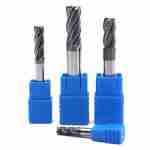
Solid carbide lets you cut in the hardened condition instead of re‑softening and re‑hardening parts, which can shorten total lead time when you have a rigid machine, good holders and a hard‑milling‑ready toolpath. For tools specifically engineered for these hardness levels, see the hardened steel end mill solutions.
2.3 Stainless Steels (304, 316, 17‑4PH, 1Cr18Ni9Ti, etc.)
Recommended series: NCPX for stainless. Typical use: 300/400‑series stainless components, stainless mold inserts and corrosion‑resistant parts.
With the right substrate and coating, solid carbide helps reduce built‑up edge (BUE) and chip welding, so you get more predictable tool life and finish quality. You still need to manage cutting speed, feed per tooth and coolant carefully to avoid rubbing and overheating. You can review stainless‑oriented geometries in the stainless steel cutting tool section.
2.4 Aluminum Alloys (General and Aerospace)
Recommended series: AU, AUR. Typical use: high‑speed contouring, pocketing and finishing in aluminum and aluminum molds.
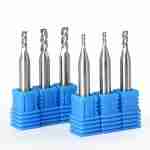
Higher helix angles, polished flutes and large chip spaces allow higher spindle speeds and feed per tooth, so you can push metal removal rate while holding surface finish, as long as the machine can keep up. For aluminum‑specific geometries and coatings, refer to solid carbide end mills for aluminum.
2.5 Titanium Alloys and High‑Temperature Alloys (Ti‑6Al‑4V, Inconel 718, etc.)
Recommended series: NCPX or dedicated titanium / superalloy tools (check with our engineers). Typical use: aerospace structural parts, medical components and high‑temperature fixtures.
You get a mix of wear resistance and edge toughness that, together with a high‑temperature coating, can survive the heat and pressure if coolant delivery, chip evacuation and toolpaths are done right. You can see typical designs used here in the end mills for titanium applications.
3. Where Solid Carbide Usually Earns Its Place
Solid carbide is not automatically the right answer for every cut. It shines in hardened steel machining and related work when these types of operations are under control.
- Semi‑finishing and finishing of pre‑hardened mold blocks: When you leave 0.10–0.40 mm stock and use stable holders and toolpaths, solid carbide helps keep size and surface finish more consistent over multiple cavities.
- Direct machining of hardened inserts (HRC45–65): With low runout, proper step‑down and step‑over, and a proper hard‑milling strategy, you can reduce the amount of re‑work and grinding on cores, inserts and wear surfaces.
- Deep pockets and thin walls: With the right stick‑out, flute count and toolpath, solid carbide can work in the 5–7×D overhang range on many jobs and still give usable life and finish. The safe overhang limit is job‑specific and must be checked by your process engineer.
- Small features and 3D surfaces: Dedicated small‑diameter solid carbide tools and ball nose cutters help you control detail and surface quality in sliders, ejector areas and complex surfaces that would be time‑consuming to grind or EDM.
For practical examples of where carbide is used in different industries, see the applications overview. Solid carbide will not fix poor workholding, underpowered spindles or wrong toolpaths. It simply gives you more capability in hardened steel machining when the rest of the process is solid.
4. What the Carbide and Coating Actually Do
Looking at common JYC Carbide grades and mainstream cutting grades, the gains in hardened steel and difficult‑to‑cut materials come from a few realistic factors, not “superpowers”.
- Substrate hardness vs. toughness: By tuning cobalt content and grain size, you can balance wear resistance against chipping resistance. Harder, fine‑grain substrates favor wear resistance in hardened steels, while tougher grades are better for stainless and titanium where edge chipping and BUE are more of a risk.
- Coating temperature resistance and friction behavior: AlCrN and similar PVD coatings are designed to handle high temperatures and slow down flank wear and oxidation in hard steels and high‑temperature alloys. Other coatings focus more on reducing friction and sticking in stainless and nickel alloys. You still need to run the correct Vc, fz, ap and ae for that coating and material.
- Regrind potential and cost per part: Standard solid carbide end mills in the 1–20 mm diameter range can often be reground multiple times if the original geometry and wear pattern allow it. The real number of regrinds depends on diameter, flute length, corner geometry and how the tool was run. A sensible regrind strategy can lower the effective tool cost per part without asking the tool to do something it was not designed for.
5. Hardened Steel and Titanium: Use Data as a Range
The original article used specific numbers for titanium roughing and DC53 hard finishing, including material removal rate and tool life multipliers. Those numbers were from very specific machines and setups and are not general promises. A safer, more honest way to use them is as starting ranges for hardened steel machining and titanium machining, with clear context: they are internal test examples.
5.1 Titanium Roughing (Example: Ø16 mm, 4‑Flute End Mill)
On a rigid machining center with a solid holder, good coolant flow (external or internal) and a stable toolpath, a solid carbide end mill will usually run at higher cutting speeds than a comparable HSS end mill and still give workable tool life. The exact spindle speed, feed per tooth (mm/tooth or IPT), axial depth ap and radial depth ae must be set for your machine, holder and part geometry.
A practical approach is to start from JYC’s application suggestions for titanium and then tune based on edge wear, sound and spindle load, rather than expecting a fixed life multiplier.
5.2 DC53 (Around HRC60–62) Finishing (Example: Ø8 mm Ball Nose)
For tempered and heat‑treated tool steels like DC53, a hardened‑steel‑grade ball nose cutter can deliver stable surface finish when you keep chip load and step‑over small and runout under control. We recommend starting with conservative step‑downs and step‑overs and checking actual Ra and dimensional drift on your parts.
From there, adjust your SFM / m/min and feed until you hit the balance between finish, cycle time and tool life that works for your shop. If you want to go deeper specifically on machining hardened steel, you can cross‑reference our machining hardened steel guide in the same technical hub cluster.
If you want to publish detailed cutting data, the standard approach is to attach them as “application examples” with full context: machine model, holder type, tool series, coolant type, toolpath strategy and workpiece material designation. Treat those as case studies, not universal rules for every hardened steel machining job.
6. Six Common Mistakes That Kill Carbide Fast
These points come from day‑to‑day troubleshooting in hardened steel and other difficult materials. They are not hard rules, but they are patterns we see repeatedly.
- Ignoring tool runout: Once total indicated runout (TIR) grows beyond roughly 0.008 mm for many small and medium diameters, one flute starts doing most of the work. That flute chips first, and tool life drops sharply.
- Low coolant concentration in titanium: Titanium has poor thermal conductivity. If coolant concentration is too low, the edge runs hotter, and you see crater wear and chipping sooner. Follow your coolant supplier’s recommended range and keep it stable.
- Copying HSS cutting data to carbide: HSS and solid carbide do not want the same combination of Vc, fz, ap and ae. Running carbide at HSS‑style low surface speeds and heavy depths can overload the edge or create rubbing that wipes out tools quickly.
- Long stick‑out with “normal” engagement: With long overhangs, regular width‑of‑cut and depth‑of‑cut can create high radial loads, chatter and chipped edges. Use reduced ae, smaller ap and constant‑engagement toolpaths for long‑reach jobs.
- Skipping spindle warm‑up before hard finishing: On tight tolerance hardened steel work, thermal growth in the spindle can cause noticeable size drift. A consistent warm‑up routine helps stabilize size before you chase microns with tool offsets.
- Dry cutting stainless with poor chip evacuation: When stainless is cut dry without air blast, chips can recut, form BUE and damage the edge quickly. A combination of coolant or mist and aggressive chip evacuation usually gives more stable tool life.
7. Selecting Solid Carbide Geometry for Hardened Steel
Instead of saying “pay more, get 10–15× tool life,” it is more useful to talk about where advanced solid carbide geometries are worth the investment in hardened steel machining.
- Variable helix and unequal flute spacing: Useful in hardened steels and stainless when you fight chatter and want better surface finish in side milling. See typical 4‑flute designs in the 4‑flute solid carbide end mill range
- Through‑coolant designs: Important for deep pockets, deep holes and high‑temperature alloys. High‑pressure through‑coolant supports chip evacuation and temperature control, which stabilizes tool life. Related drill geometries are covered in the carbide drills for deep‑hole machining page
- Material‑specific coatings: Hard‑milling‑grade coatings (for example, AlCrN‑type) are better suited for HRC45–65 steels. Stainless and high‑temperature alloys often benefit more from coatings tuned for adhesion resistance and oxidation resistance.
When geometry, coating and cutting data match the material and machine, solid carbide can deliver repeatable tool life and size over multiple parts or cavities. The actual cost benefit must be evaluated against your current tools and process data, not assumed from marketing multipliers.
8. Tolerances, Specs and Plant Capabilities
JYC Carbide / Jinyuchang Industrial Technology Co., Ltd supports its solid carbide tools with verifiable manufacturing data and quality systems. For a broader company overview and supply chain information, you can also review the about us page.
8.1 Supported manufacturer Plant and Output
| Plant area | 270,000 m² |
| SKUs | 5,000+ |
| Active customers | 1,200+ |
| Pieces delivered | 40 million+ |
| Countries served | 40+ |
8.2 Grinding and Inspection Equipment
- Grinding: P3 WALTER, ANCA, ROLLOMATIC 5‑axis CNC tool grinders
- Measurement: ZOLLER presetters, laser measurement, FEI microscopes, CMM and other inspection systems
8.3 Certifications and Quality Control
Management systems: ISO 9001 / 14001 / 45001 / 50001. Documentation: JYC Carbide supplies inspection reports and COC with shipments as standard; third‑party reports such as SGS can be arranged separately if required by the project and agreed commercially before testing.
For common standards and tolerance questions, there is also a dedicated standards and specifications. FAQ
8.4 Typical Dimensional Tolerances
| Cutting diameter D ≤ 12 mm | 0 to -0.020 mm |
| Cutting diameter D > 12 mm | 0 to -0.030 mm |
| Corner radius tolerance | ±0.01 mm |
| Shank tolerance | h6 (per ISO 286‑1) |
| Runout (D ≤ 12 mm) | ≤0.05 mm (per batch inspection report) |
For tighter tolerances or special geometries, please include full drawings and tolerance requirements in your RFQ so our engineers can confirm feasibility and lead time.
9. Limits and Risk Notes for Hardened Steel Machining
Important limitations: These points describe where solid carbide is not the right answer or needs special care. They are here to help you avoid costly mistakes, not to sell you more tools.
- If the machine lacks rigidity, has noticeable spindle runout or unstable workholding, direct hard milling of HRC45–65 materials with long overhangs may not be reliable.
- For ultra‑tight tolerances or high‑volume hardened steel parts where long‑term Cpk is critical, you will often still need grinding, honing or EDM in the process, even if carbide does most of the metal removal.
- For extreme applications (very deep cavities, very high hardness, exotic alloys), involve JYC engineers early so tool design and process strategy can be aligned from the start.
Solid carbide is one piece of the system. It works best when material condition, machine capability, toolholding, coolant and toolpaths are all planned together.
10. Author, Data Sources and Updates
Brand: JYC Carbide Author: Application and product team, JYC Carbide (solid carbide tooling for hardened steel machining).
Technical review: Senior process engineers with hard‑milling experience in mold and die applications.
Data sources: JYC Carbide internal cutting tests and customer applications, plus general industry guidance for machining hardened steel and difficult materials.
Last updated: May 2026
Where we reference standards (for example ISO 286‑1 or ISO‑style tolerance practices), they follow publicly available definitions and are applied as internal manufacturing targets, not external performance guarantees.
FAQs
Can solid carbide end mills really cut hardened steel up to HRC65?
Yes, if you use a rigid machine, low runout holder, hard‑milling‑grade carbide and coating, plus conservative ap/ae and constant‑engagement toolpaths.
What is a safe starting point for hard milling parameters?
Confirm hardness, pick a tool made for that HRC band, start around 200–400 SFM with light step‑down and step‑over, then adjust based on wear and spindle load.
Do I need coolant for machining hardened steel with carbide?
Most hard milling runs with air blast only to avoid thermal shock; use proper coolant in stainless, titanium and drilling where heat and chip evacuation are critical.
11. Contact and Next Steps
If you want hardened steel machining data tailored to your parts, or you are evaluating a move from generic tools to dedicated solid carbide grades, you can reach the JYC Carbide engineering team here:
- Website: carbide-factory.com
- WhatsApp: 0086‑189‑2679‑8587
- RFQ form: use the contact us or the quote form linked from related product pages.
Depending on your project, we can recommend suitable solid carbide tool series and initial cutting ranges for your material, hardness and machine type, and discuss sample tools and technical data packages under agreed conditions, including which SKUs, quantities and any shipping cost responsibilities.
We do not make blanket promises about specific tool life multipliers or cost savings in hardened steel machining. All performance figures are subject to your actual machining conditions and the technical agreement reached between your team and our engineers.
Talk to an engineer about your hardened steel job We will review your material, hardness and machine setup, and provide recommendations customized to your conditions.


Request a Quote for Carbide Tools