What Is a 2 Flute Ball Nose Carbide End Mill?
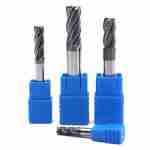
A 2 flute ball nose carbide end mill is a solid carbide milling cutter with a full-radius hemispherical tip, designed for profiling, cavity machining, ball-slot milling, and high-speed contouring on curved or freeform surfaces.
Product Details

- Shank Dia (mm):4mm 6mm 8mm 10mm 12mm 14mm 16mm 18mm 20mm
- Flute Dia.(mm):1mm – 20mm
- Cutting Length (mm):1mm – 20mm
- R (mm): 0.5-10mm
- Overall Length (mm):50mm – 100mm
- Flutes:2 Flutes
- HRC:HRC 45 / 55 / 60 / 65
- MOQ:1 pcs (standard) / 1-50 pc (custom)
- Quality Standards: DIN 6537 and DIN 6535-HA
Designed for CNC machine shop owners, mold makers, and procurement teams who need stable batch quality and long-term stock support, this tool is especially suitable for carbon steel, alloy steel, pre-hardened steel, hardened steel up to 45HRC, and cast iron. For buyers comparing geometry options across different cutter families, reviewing the types of milling cutters helps clarify when a ball nose tool is the right choice instead of a square or corner radius design.
In workshop language, this tool is also called a ball cutter, ball end mill, or round nose cutter. On drawings and purchase lists, it is often written as D6 Ball, 2F Ball Nose, or Ø6 R3, depending on the customer’s in-house notation system.
This geometry is widely used in mold and die production because the rounded cutting edge can follow three-dimensional contours more smoothly than flat-bottom tools. It is a practical choice when the part surface includes blended radii, cavity transitions, or sculpted profiles that require consistent surface flow rather than sharp internal corners.
| Brand | JYC Carbide |
| Model NO. | Flute Ball Nose Carbide End Mill |
| Product Item No. | JYC-NCG-2B-D1-20 |
| Material | Tungsten Carbide (WC-Co) |
| Material Cobalt Content | Available for 6%-12% Usually 10%,12% |
| Material Hardness HV30 | Available 1660-2000 Usually 1660, 1700, 1780 |
| Grade | YG6 / YG8 / YL10.2/YK20UF/YK25UF/YK30SF |
| Coating | TiAlN |
| Grain Size | 0.2-1.0um Usually 0.4um, 0.5um ,0.7um |
| Density | 14.2-14.90 g/cm3, usually 14.2g/cm3, 14.5g/cm3 |
| Tooth Form | Spiral Tooth |
| Tooth Space | Sparse Tooth |
| Inspection Type for Finished Products: | 100% inspection (Visual inspection & Function inspection) |
| Traceability of Raw Materials: | Yes |
| Tolerance | h6 |
| Customization: | Available |
| Laser Logo | Available |
| MOQ | 1 pcs (standard) / 1-50 pc (custom) |
| Lead Time | 3–5 days (standard) / 7–30 days (custom) |
| Certification | ISO 9001 / ISO 14001 / ISO 45001 / ISO 50001 / COC |
| Custom Service | OEM / ODM accepted |
Products Pictures


Available Size:
Available Size
| NO. | Order Product No. | Size (mm) | Flutes Z | |||
|---|---|---|---|---|---|---|
| D | Handle D. | Cutting Length | Total Length | |||
| 1 | NCG-2B-R0.5S | 1 | 4 | 2 | 50 | 2 |
| 2 | NCG-2B-R0.75S | 1.5 | 4 | 3 | 50 | 2 |
| 3 | NCG-2B-R1.0S | 2 | 4 | 4 | 50 | 2 |
| 4 | NCG-2B-R1.25S | 2.5 | 4 | 5 | 50 | 2 |
| 5 | NCG-2B-R1.5S | 3 | 4 | 6 | 50 | 2 |
| 6 | NCG-2B-R2.0S | 4 | 4 | 8 | 50 | 2 |
| 7 | NCG-2B-R0.5 | 1 | 6 | 2 | 50 | 2 |
| 8 | NCG-2B-R0.75 | 1.5 | 6 | 3 | 50 | 2 |
| 9 | NCG-2B-R1.0 | 2 | 6 | 4 | 50 | 2 |
| 10 | NCG-2B-R1.25 | 2.5 | 6 | 5 | 50 | 2 |
| 11 | NCG-2B-R1.5 | 3 | 6 | 6 | 50 | 2 |
| 12 | NCG-2B-R1.75 | 3.5 | 6 | 8 | 50 | 2 |
| 13 | NCG-2B-R2.0 | 4 | 6 | 8 | 50 | 2 |
| 14 | NCG-2B-R2.5 | 5 | 6 | 10 | 50 | 2 |
| 15 | NCG-2B-R2.75 | 5.5 | 6 | 12 | 50 | 2 |
| 16 | NCG-2B-R3.0 | 6 | 6 | 12 | 50 | 2 |
| 17 | NCG-2B-R3.5 | 7 | 8 | 14 | 60 | 2 |
| 18 | NCG-2B-R4.0 | 8 | 8 | 16 | 60 | 2 |
| 19 | NCG-2B-R4.5 | 9 | 10 | 18 | 75 | 2 |
| 20 | NCG-2B-R5.0 | 10 | 10 | 20 | 75 | 2 |
| 21 | NCG-2B-R6.0 | 12 | 12 | 24 | 75 | 2 |
| 22 | NCG-2B-R7.0 | 14 | 14 | 28 | 75 | 2 |
| 23 | NCG-2B-R8.0 | 16 | 16 | 32 | 100 | 2 |
| 24 | NCG-2B-R10.0 | 20 | 20 | 40 | 100 | 2 |
Non-standard sizes available upon request. Contact us for custom specifications, We will feedback to you within 24 Hours.
* Non-standard sizes available upon request. Contact us for custom specifications,We will feedback to you within 24 Hours.
Applicability for Materials
◎ = Perfect for ○ = Suit — = N/A
| Carbon Steel | Alloy Steel | Pre-hardened Steel / Hardened Steel | Stainless Steel | Cast Iron / Nodular Cast Iron | Copper Alloy | Aluminium Alloy | Titanium Alloy | Heat-resistant Alloy | |||
|---|---|---|---|---|---|---|---|---|---|---|---|
| ~45HRC | ~50HRC | ~55HRC | ~68HRC | ||||||||
| ◎ | ◎ | ◎ | ○ | — | — | ○ | ◎ | — | — | — | — |
Product Features
Why 2 Flutes Work Better in Ball Nose Applications
The value of a 2-flute structure is not simply lower flute count, but better chip evacuation in curved-path cutting. During profiling, cavity finishing, and ball-slot passes, the tool constantly enters and exits the workpiece at changing engagement angles, so larger flute valleys help reduce chip recutting and keep the cutting edge more stable.
Why TiAlN Coating Matters in Steel Machining
TiAlN coating is useful because steel-focused ball nose tools usually fail from heat buildup, edge adhesion, and gradual wear before sudden breakage occurs. When buyers want to improve cycle stability and reduce premature wear in repeated contour machining, understanding tungsten carbide tool life helps explain why coating, heat resistance, and application matching matter more than unit price alone.
Why a Helix Angle Above 35° Improves Surface Stability
A helix angle above 35° supports a smoother cutting entry and a more progressive load distribution along the flute. In ball nose tools, that matters because the effective cutting diameter changes continuously from the center toward the outer radius, so a stable helix design helps reduce chatter, irregular tool marks, and edge stress during continuous 3D passes.
Why Process Consistency Matters for B2B Buyers
For professional buyers, the tool itself is only part of the decision. Batch repeatability, coating consistency, grinding quality, and process inspection are equally important because a visually acceptable sample is not enough if mass production parts show unstable surface finish or variable tool life.
Application Range
Best-Fit Materials and Operations
This 2 flute ball nose carbide end mill is best matched to carbon steel, alloy steel, pre-hardened steel, hardened steel up to 45HRC, cast iron, and ductile iron. In practical use, it performs especially well in profiling, cavity machining, ball-slot milling, and high-speed contour finishing for molds, dies, and general precision components. This is a most popular tool for most of Carbide Manufacturer in China.
For mold-related work, this geometry fits especially well into die and mold machining because it can follow blended surfaces, cavity walls, and curved transitions with less risk of abrupt edge loading. Buyers also comparing nearby product families for the same industry can review mold making end mills to understand how ball nose, corner radius, and flat end mill styles divide the work inside one mold project.
Secondary Materials
Pre-hardened steel and hardened steel up to 50HRC can be treated as secondary applications when cutting parameters are reduced and machine rigidity is adequate. Stainless steel can also be machined, but because of work-hardening behavior, it is better suited to controlled semi-finishing and finishing rather than unstable stop-and-go cutting paths.
Not Recommended For
This tool is not the first recommendation for titanium alloys, aluminum-focused high-speed finishing, or sustained production above 50HRC. For titanium-specific applications, a dedicated solution such as end mill for titanium is a better fit because the geometry and cutting balance needed for reactive alloys are different from those used in general steel profiling.
| Industry | Typical Operation | Fit Level |
|---|---|---|
| Mold & Die | Profiling, cavity finishing, ball-slot machining | Primary |
| Automotive | Contour milling on steel and cast components | Primary |
| General Machining | 3D surface milling and radius transition finishing | Primary |
| Stainless Steel Parts | Semi-finishing with controlled chip load | Secondary |
Selection Guide
How to Choose the Right Tool for the Job
If the drawing includes freeform surfaces, cavity blends, spherical grooves, or continuous curved transitions, a 2-flute ball nose tool is usually the correct geometry. If the workpiece is below 45HRC and the process goal is stable contour finishing, this tool fits the main application window well.
If the material moves toward the 45HRC to 50HRC range, the tool can still be used for secondary applications, but feed, depth, and cutting stability should be managed more carefully. For buyers who want a broader framework before choosing between ball nose, corner radius, flat end mill, or hardened-steel-specific options, this how to choose carbide end mill guide is a useful internal reference.
When to Choose Another Tool Instead
If the part requires a flat floor plus a wall radius, a corner radius end mill is often the better option because a ball nose tool leaves scallop height on flat surfaces. If the main objective is heavy stock removal rather than contour quality, a different flute design or a roughing-style cutter may be more efficient.
Purchasing Checklist
What Procurement Teams Should Confirm Before Ordering
Before placing an order, confirm the actual workpiece material and real hardness value instead of relying only on the material name. Also confirm the full tool notation, including diameter, radius, flute length, and overall length, because incomplete specifications often lead to the wrong reach or cutting length for cavity work.
It is also important to check whether the supplier’s ISO documentation covers the real manufacturing site, whether batch inspection is part of the standard process, and whether COC documents are available with shipment. Buyers who want a structured benchmark for comparing factories can use this carbide tool supplier evaluation resource as a practical screening reference.
For urgent replenishment needs, long-term stock availability can be as important as price, especially when a mold project is already in production. Sample-first purchasing is a sensible approach for first cooperation because it reduces quality risk before the order moves into repeat supply.
Failure Cases
Case 1: Wrong Hardness Judgment
A buyer ordered a 2-flute ball nose tool for P20 cavity profiling but did not verify the real hardness of the workpiece. The tool was then run with normal pre-hardened steel parameters even though the actual hardness was much closer to the secondary-use limit, which caused edge damage and unstable surface quality.
Case 2: Price-Only Supplier Selection
Another buyer selected a supplier mainly on price without checking grinding capability or process inspection discipline. The sample looked acceptable, but the production batch showed inconsistent contour finish because the tool geometry quality was not stable from batch to batch.
Case 3: Wrong Geometry Selection
A shop chose a ball nose tool for a pocket that required a flat floor with a controlled corner blend. The result was extra finishing work because the geometry was correct for curved surfaces but inefficient for flat-bottom features with radius transitions.
These cases show that tool failure is often caused by mismatch rather than by the cutter alone. When hardness, geometry, application, and supplier process control are aligned, the tool performs much more predictably in real production.
Packaging & Delivery
| Packaging | Individual plastic tube + foam box |
| Port | Shenzhen / Guangzhou /Shanghai |
| Lead Time | 3–5 days (in-stock) / 7–30 days (custom) |
| Shipping | DHL / FedEx / UPS / Sea freight |
FAQs
Q: What is the best use for a 2 flute ball nose carbide end mill?
A: It is best used for profiling, cavity machining, ball-slot milling, and high-speed contour finishing on carbon steel, alloy steel, pre-hardened steel, hardened steel up to 45HRC, cast iron, and ductile iron. It is especially useful when the part surface includes blended radii or three-dimensional contours.
Q: Can this 2 flute ball nose carbide end mill machine hardened steel up to 50HRC?
A: Yes, but only as a secondary application. When the workpiece hardness approaches 50HRC, the tool should be used with reduced feed, lighter depth of cut, and stable machine conditions. It is better suited to semi-finishing and finishing than to aggressive roughing in that range.
Q: Is a 2 flute ball nose end mill suitable for stainless steel?
A: It can be used for stainless steel, but stainless applications need more careful control of chip load and cutting stability because of work-hardening behavior. It is generally better for controlled finishing paths than for unstable or interrupted cutting.
A VISIBLE QUALITY. YOU CAN BE TRUSTED.
01
Please confirm the tool size, coating type, and material compatibility before placing an order.
02
Carbide end mills are fragile – avoid impact and store them in a dry, secure place.
03
Ensure proper cutting parameters (speed, feed, depth) for best performance and tool life.
04
Wear safety protection (goggles, gloves) when operating cutting tools.
05
If you’re not sure which type to choose, feel free to contact us for professional recommendations.
Purchase Information
After-sales Support: We offer technical guidance and quick response for any product or usage concerns.
MOQ & Customization: Most models are in stock. Custom logo, size, or packaging is available – please consult before ordering.
Shipping Terms: We support express, air, and sea shipping. Delivery time may vary by region and quantity.
Quality Assurance: All tools are inspected before shipment. We provide SGS and ISO certificates upon request.
Returns & Warranty: Defective or damaged products due to manufacturing issues can be replaced.
2 Flute Ball Nose Carbide End Mill Supplier | ISO 9001 | JYC

Buy 2 flute ball nose carbide end mills from ISO 9001 certified factory. MOQ 1pc, in-stock, 3–5 days delivery. Quote: info@carbide-factory.com2 Flute Ball Nose Carbide End Mill Supplier | ISO 9001 | JYC
Product SKU: JYC-NCG-2B-D1-20
Product Brand: JYC Carbide
Product Currency: USD
Product Price: 8
Price Valid Until: 2036-12-12
Product In-Stock: InStock
4.89



Request a Quote for Carbide Tools