13 Common Types of Milling Cutters: A Complete Guide for Machinists
Choosing the right milling cutter is one of the most critical decisions you’ll make. The wrong tool doesn’t just slow you down — it costs you in scrap, downtime, and premature tool wear. This guide breaks down the 13 most common types of milling cutters, what they do, and when to use them, so you can make confident decisions on the shop floor.
What Is a Milling Cutter?
Milling cutters are rotating cutting tools mounted on milling machines to remove material from metal, plastic, wood, and composites. They come in a wide range of shapes, sizes, and configurations — each designed for a specific job. Understanding the differences isn’t just academic: the right cutter improves surface finish, extends tool life, and dramatically reduces cycle time.
There are roughly 10–15 commonly recognized types depending on the source. Below, we cover the definitive 13.
The user query mentioned “13 different types”.
In reality, there are about 10–15 common types (different sources vary slightly). Below is a compilation of the most common 13 types of milling cutters, complete with function descriptions and diagrams.

End Mill
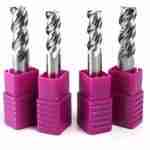
The most versatile milling cutter, capable of both side and end cutting. It is used for slot milling, contour milling, step milling, etc., and is the most common in CNC machining.

Face Mill
Mainly used for large-area flat surface machining. The inserts are replaceable, offering high efficiency and ideal for horizontal plane cutting.

Ball Nose / Ball Cutter End Mill
The cutter head is spherical and is used for 3D curved surfaces, mold cavities, and fillet machining.

Slab Mill / Plain Milling Cutter
Mainly used on horizontal milling machines to machine wide flat surfaces. It is commonly mounted on an arbor.
Side and Face Milling Cutter
Both side and face have cutting edges. It is used for slot milling, side machining, and indexing milling.

Involute Gear Cutter
Specialized tool for machining gear tooth profiles.
Fly Cutter
Single-edge or few-edge cutter used for large flat surface finishing. It is low-cost.
Hollow Mill
Used for machining the outer diameter of tubular or cylindrical parts.
Shell Mill
Large-diameter end mill style with replaceable inserts, mounted on an arbor.
Roughing End Mill
he cutting edge has waves or serrations for rapid removal of large amounts of material. It is suitable for roughing.
Dovetail Cutter
Specialized tool for machining dovetail slots.
Woodruff Cutter / Keyseat Cutter
Used for machining half-round keyseats on shafts.
T-Slot Cutter / Slot Milling Cutter
First use an end mill to open a straight slot, then use this cutter to form the T-shape.

Explanation of Other Related Types from Your Query
Mainly refers to tools mounted on the arbor of horizontal milling machines, such as slab mills, side milling cutters, and saw blade cutters. Horizontal milling is suitable for heavy cutting and large flat surface machining.
CNC Milling Cutters
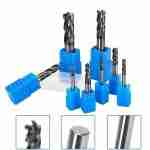
Usually refers to end mills suitable for CNC machines, including flat-bottom, ball nose, and round-nose cutters. Most are carbide with coatings, ideal for high-speed and high-precision machining.
Carbide Milling Cutters
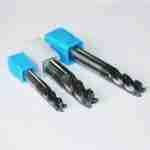
Made of tungsten carbide. Harder, more wear-resistant, and heat-resistant than high-speed steel (HSS). Suitable for difficult-to-machine materials such as stainless steel, die steel, and cast iron. It is the mainstream choice for CNC machining.
Slot Milling Cutters
Specially used for slotting, including straight slots, T-slots, and keyseats. Precise width with common double-flute or multi-flute designs.
Fir Tree Milling Cutters
Specialized tool used to machine the “fir-tree” (fir tree / fir-tree profile) root slots at the base of aero-engine turbine blades. The shape is complex with extremely high precision requirements and is usually a solid carbide tool. (Similar to specialized forming cutters)
Common Material Classifications for Milling Cutters:
- High-Speed Steel (HSS) — Good toughness, low price, suitable for general machining.
- Carbide — High hardness, suitable for high-speed CNC.
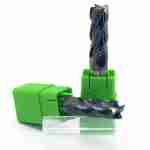
- Coated Tools — TiAlN, DLC, and other coatings can improve wear resistance and service life.
Milling Cutter Materials at a Glance
| Material | Hardness | Best For | Key Tradeoff |
|---|---|---|---|
| High-Speed Steel (HSS) | Moderate | General machining, interrupted cuts | Lower speed capability |
| Solid Carbide | High | CNC high-speed, difficult materials | More brittle, higher cost |
| Coated (TiAlN / DLC / AlTiN) | High + thermal resistance | Dry cutting, hardened steel, stainless | Coating adds cost |
How to Choose the Right Milling Cutter
- Roughing: Use roughing end mills or large-diameter face mills to maximize material removal rate
- Finishing: Multi-flute ball nose or coated flat end mills deliver superior surface finish
- CNC machining: Standard end mill + pull-stud tool holder is the universal starting point
- Horizontal milling: Go with arbor-mounted cutters (slab mill, side & face) for heavy stock removal
- Specialty features (dovetails, T-slots, keyseats): Always use the dedicated form cutter — attempting these with standard end mills wastes time and risks part rejection
FAQ
What is the difference between an end mill and a face mill?
An end mill cuts on both its tip and sides — ideal for slots, contours, and pockets. A face mill only cuts on its bottom face, designed for covering large flat surfaces quickly using replaceable inserts. Simple rule: end mill for detail work, face mill for surfacing.
When should I choose carbide over HSS milling cutters?
Choose carbide for hard materials (stainless steel, die steel, cast iron) and high-speed CNC operations — it stays sharp at higher temperatures. HSS is better for manual milling or interrupted cuts where toughness matters more than speed. For CNC production work, carbide with TiAlN coating is the standard
How do I choose the right milling cutter?
Ask three questions: What material? What feature? What machine? Use roughing end mills for bulk removal, ball nose or multi-flute coated mills for finishing, and dedicated form cutters (T-slot, dovetail, keyseat) for specialty profiles. Always match cutter diameter to your machine’s rigidity to avoid chatter.
Get the Right Cutter for Your Next Job
With over 50 years of manufacturing experience, Carbide Factory produces solid carbide end mills, ball nose cutters, roughing mills, and custom form tools trusted by machinists worldwide. Every cutter is precision-ground to tight tolerances with premium PVD coatings applied in-house.
Ready to upgrade your tooling?
👉 Browse Our Full Milling Cutter Catalog — filter by diameter, flute count, coating, and application.
📩 Have a custom requirement? Send us your drawing or job spec and our engineering team will recommend the optimal tool within 24 hours.
🔧 Not sure where to start? Contact our technical team — real machinists, not salespeople.

Request a Quote for Carbide Tools