Carbide vs HSS in Milling: Where Carbide Really Makes Sense
Author: JYC Carbide Technical Team Last updated: May 2026
In modern CNC milling, solid carbide cutting tools have become the default choice in many production shops. The real question for most teams is no longer “Should we use carbide?” but rather “On which materials and operations does carbide actually outperform our current HSS tools, and how do we switch without creating new problems?”


This page focuses on three practical points, not marketing slogans: where solid carbide end mills show the clearest advantage over general‑purpose HSS, how carbide behaves on different materials, and what to watch out for when you move key operations from HSS to carbide.
1. Where Solid Carbide End Mills Tend to Outperform HSS
Looking at everyday CNC work, solid carbide mills usually have the upper hand over general‑purpose HSS tools in the following features:
- Faces and steps
- Slots of various types (straight slots, keyways, dovetails with dedicated tools, T‑slots)
- Cavities, deep pockets, thin‑wall sections
- Complex 3D contours such as blades, impellers, and freeform mold surfaces
- Chamfering, deburring, and profile finishing
- Helical interpolation and ramping when opening pockets or bores
In short, for most repeatable milling operations at moderate to high cutting speeds, solid carbide cutting tools are more suitable than generic HSS tools, as long as the geometry and coating match the job instead of assuming one carbide tool cuts everything. If you want to review typical end mill types and geometries in more detail, see the overview on types of milling cutters.
2. Typical Carbide vs HSS Behavior by Material Group
The material‑based notes below come from long‑term cooperation with mold shops, automotive suppliers, and general machining customers. They are not absolute promises. Actual tool life and productivity differences must be confirmed in your own machines and setups.
2.1 Carbon and alloy steels
(e.g. 1045, 4140, 42CrMo, P20, 1.2738)
Typical jobs: general structural parts, mold bases, fixtures. With solid workholding and reasonable coolant, solid carbide end mills can run at higher Vc (cutting speed) than HSS and remove more material per tool, which helps reduce cycle time and the number of tool changes.
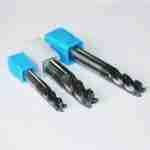
When switching from HSS to carbide, a safe starting point is around 120–150% of your current HSS cutting speed, not an aggressive “maximum” recipe. For quenched and tempered steels and pre‑hard mold steels, use 4‑flute or higher‑flute carbide tools with a suitable heat‑resistant coating. For steel slotting in particular, you can refer to the 4‑flute end mill for steel slotting as a representative geometry.
2.2 Mold steels
(e.g. NAK80, S136, H13, SKD61, typically HRC 30–52)
Typical jobs: cavity roughing, semi‑finishing, and finishing. In roughing and semi‑finishing, solid carbide tools can run at higher Vc and still maintain a predictable life, which helps shorten lead times. In finishing, small‑diameter carbide ball and corner‑radius end mills can run higher RPM and generate better surface finishes than HSS.
For HRC 50+ materials, use carbide grades and geometries designed for hardened steel and control ap (axial depth) and ae (radial depth) carefully. Re‑using soft‑steel cutting parameters is a common cause of chipping. For a broader view of hardened‑steel milling strategies, see machining hardened steel.
2.3 Stainless steels
(e.g. 304, 316, 17‑4PH, 420)
Typical jobs: corrosion‑resistant parts, medical components, food‑processing equipment. Compared with HSS, carbide offers better heat and wear resistance in stainless, especially when paired with coatings like AlCrN or stainless‑optimized nano‑layer coatings. Tool life is usually more stable and predictable once the geometry, coating, and coolant strategy are dialed in.
Choose geometries optimized for stainless (larger clearance angles, sharp but reinforced cutting edges) and avoid long periods of light “rubbing” cuts that encourage built‑up edge (BUE). For stainless‑specific tooling examples, you can review the stainless steel cutting tool product page.
2.4 Gray and ductile iron
(e.g. HT250, QT600)
Typical jobs: machine bases, housings, pump bodies, valve bodies. Cast iron is naturally machinable but abrasive. With the right geometry and coating, solid carbide cutting tools can run at relatively high cutting speeds and give a stable tool life, often outperforming general‑purpose HSS tools on both throughput and changeover frequency.
Dust is significant; protect ways and enclosures. High‑strength ductile irons may require lower cutting speeds and robust fixturing.
2.5 Aluminum and non‑ferrous alloys
(e.g. 6061, 7075, brass, copper alloys)
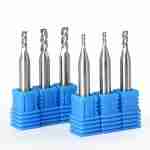
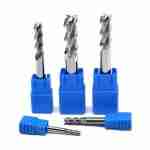
Typical jobs: 3C components, lightweight automotive parts, structural frames. Solid carbide aluminum end mills with polished flutes and large chip space handle high‑RPM aluminum machining better than HSS, especially where chip evacuation and BUE control are critical.
For aluminum, uncoated or DLC‑coated carbide is often more effective than general “steel” coatings. Using a steel‑type coating on aluminum can actually make chip welding worse. For additional aluminum‑focused tooling options, see solid carbide end mills for aluminum.
2.6 Titanium and high‑temperature alloys
(e.g. Ti‑6Al‑4V, Inconel 718)
Typical jobs: aerospace, energy, power‑generation components. Under the right combination of low cutting speeds, relatively high feed per tooth, and generous coolant, carbide tools hold up better than HSS against heat and load, and can maintain cutting edges longer on these difficult materials.
Use geometries and coatings designed specifically for titanium or nickel alloys, and start with conservative Vc / fz / ap / ae. High‑rigidity setups and good chip evacuation are non‑negotiable. As a reference for this group, you can look at the end mill for titanium.
Short version: in most industrial materials, solid carbide cutting tools generally provide longer life and higher productivity than general‑purpose HSS mills, but the actual difference depends entirely on material, machine rigidity, workholding, coolant, and toolpath strategy. Any “X times life” claim only makes sense when anchored to a specific test setup.
3. Which Milling Operations Make the Most of Carbide?
For typical CNC milling workflows, solid carbide end mills are well‑suited to the following operations:
- Roughing (traditional roughing, high‑efficiency milling, corn‑cob or serrated roughers)
- Semi‑finish passes (leave a consistent stock for finishing)
- Finish and profile passes, including 3D surface finishing in molds and aerospace parts
- Corner clean‑out and rib‑root clean‑up
- High‑speed cutting (HSC) and high‑efficiency milling (HEM) toolpaths
- Direct hard milling of quenched mold steels in the HRC 50+ range, where appropriate
It is important to note that not every machine, fixture, or program is ready for “high‑parameter carbide” immediately. On machines with limited rigidity or older spindles, the safer path is to switch to carbide first, then gradually increase parameters as the process stabilizes. For a broader look at application‑level recommendations by industry, see the general machining applications section.
4. Core Design Features of Solid Carbide End Mills
The design features below are the real reasons solid carbide cutting tools can outperform general‑purpose HSS mills. They do not automatically give “10× tool life” on their own, but they provide a stronger foundation for consistent performance.
4.1 Ultra‑fine‑grain carbide substrate
Typical grain sizes in the 0.5–0.8 µm range balance hardness and toughness, which is important when machining higher‑hardness steels and running longer production cycles.
4.2 Ground, honed cutting edges
Edges are ground and then lightly honed rather than left extremely sharp. This helps stabilize tool life in steels and stainless and reduces early edge chipping compared to an un‑honed “razor” edge.
4.3 Material‑specific coating options
Steels and stainless steels often run best with TiAlN, AlCrN, or similar heat‑resistant coatings. Aluminum alloys generally favor uncoated or DLC‑coated carbide. High‑temperature alloys benefit from coatings engineered for high heat and abrasive wear.
4.4 Flute count and geometry tuned to application
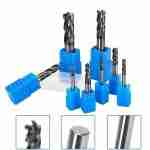
Two or three flutes often give better chip evacuation and higher feed per tooth in aluminum and non‑ferrous materials. Four to six flutes are common for steels and stainless in side milling and profile milling. Variable helix angles and unequal flute spacing help spread vibration frequencies and improve stability in thin‑wall work and long overhangs.
4.5 Coolant delivery and chip evacuation design
For deep pockets, slots, or high‑temperature alloys, tools with through‑coolant can direct coolant to the cutting zone and help evacuate chips. This reduces localized overheating and the risk of chip packing.
These design choices only deliver their benefit when coupled with appropriate Vc, fz, ap, ae, a rigid setup, and a realistic program. A tool that looks good in a catalog can still fail quickly if the machine, holder, or toolpath is not compatible. If you need to move beyond standard geometries, you can explore non‑standard carbide products for custom tooling options.
5. Common Pitfalls When Switching from HSS to Carbide
This section is based on recurring issues seen when shops move from HSS to solid carbide cutting tools. It is not a guarantee of any specific result, but a checklist to help reduce trial‑and‑error.
5.1 Do not reuse HSS toolpaths and parameters blindly
Many HSS roughing strategies rely on low cutting speed and heavy depth of cut. Copying that directly to carbide often overloads the cutting edge and causes chipping. A more reliable approach is to increase cutting speed, set a moderate ap and ae, and use toolpaths that keep chip thickness consistent, for example modern HEM‑style toolpaths where your CAM supports this.
5.2 Toolholding and runout matter as much as the tool brand
A large share of “carbide life is bad” feedback ends up being traced to worn holders, excessive TIR, or spindle issues rather than the tool itself. On first trials, use an indicator or presetter to check runout at the tool tip. For finishing work, many shops aim for about 0.02–0.03 mm TIR at the cutting edge; the exact target depends on your print tolerance and holder type.
For background on tolerances and fits, you can refer to the standards & specifications FAQ.
5.3 Carbide is not a license for unlimited heavy cuts
Even hardened‑steel‑specific carbide tools have limits on ap, ae, and chip load. For HRC 55+ workpieces, start with conservative depths and feeds, inspect the wear pattern, and only then decide whether to push harder.
5.4 Do not mix coatings and materials at random
Running a steel‑type coating on aluminum can give more chip welding than a simple polished, uncoated aluminum geometry. For best results, keep substrate, geometry, and coating aligned with the intended material class instead of choosing only by diameter and flute count.
5.5 Any “life improvement” conclusion should come from your own tests
The most meaningful comparison is same machine, same part, same program, same setup. Track either the number of parts or the total cutting distance until the tool hits your end‑of‑life criterion. A supplier can offer a reasonable starting window for Vc, fz, ap, and ae, plus typical expectations from similar shops, but only your in‑house tests can confirm actual gains.
For more in‑depth process articles around these topics, see the machining knowledge section in the carbide technical hub.
6. What to Share When You Ask for Carbide Substitution Advice
If you are evaluating solid carbide cutting tools as a replacement for existing HSS mills and want to keep dimensional stability and surface finish under control, reduce cutting tool cost or cycle time without sacrificing yield, and build a more structured cutting‑data library around your material mix, a focused technical brief will help an engineer give specific, realistic suggestions instead of generic quotes.
6.1 Key information to include in your RFQ
When you send an RFQ or inquiry, try to include:
- Main workpiece materials (for example 1045 / 4140 / P20 / 718 / 304 / 316)
- Typical part types and operations (roughing, semi‑finish, finishing, slotting, corner clean‑out, etc.)
- Machine types (vertical machining center, horizontal, gantry, mill‑turn, etc.) and holder types you use
- Tool diameters and brands you currently run, plus typical cutting parameters (Vc, fz, ap, ae)
- The primary issues you want to solve (for example unstable tool life, chatter, tolerance drift, tight lead times)
Based on that information, a tooling engineer can suggest one or more solid carbide cutting tool series, practical starting parameters, and which operations to move to carbide first versus later. Any specific expectations on tool life, cost per part, or cycle‑time reduction should then be validated in your own trials before you standardize.
For a structured way to submit this information, you can use the message to solid carbide manufacturer form to send your RFQ details directly to the engineering and sales team.
Planning to switch critical milling work from HSS to carbide?
Share your main materials, machines, and current cutting data, and our engineers will review your conditions and suggest carbide tool options and starting parameters tailored to your process.
Send an RFQ for carbide substitution advice
We will provide recommendations based on your actual machining conditions, not generic promises, so you can evaluate carbide vs HSS on your own parts and machines.
7. Where to Learn More About Carbide vs HSS at JYC Carbide
If you want to dive deeper into solid carbide cutting tools beyond this overview, the carbide technical hub groups machining knowledge, cutting‑tools insights, and academy‑style content in one place.
When you are ready to review specific products, the carbide end mills catalog shows standard sizes and series that implement the design principles discussed here.
FAQ
When should I use carbide instead of HSS?
Use carbide for stable CNC setups, higher cutting speeds, harder materials, and longer production runs where tool life and cycle time matter most.
Is carbide always better than HSS for milling?
No. Carbide is better for rigid, high‑speed CNC work, while HSS can be more forgiving and cost‑effective on softer materials or low‑volume, manual jobs.
Does switching from HSS to carbide require new toolpaths?
Often yes. Carbide usually runs higher Vc with different ap/ae. Reusing heavy HSS recipes can chip carbide; start with adjusted parameters and test.

Request a Quote for Carbide Tools