The Selection Problem That Costs You More Than You Think
When sourcing carbide rods, the question that keeps process engineers up at night is not price — it is this: why do end mills ground from two batches of “H10F” blanks perform so differently, with tool life varying by a factor of three or more?
The answer rarely lies in the grinding process. It starts with the blank itself — inconsistent grain size, cobalt content outside the stated range, or diameter tolerance wide enough to leave insufficient grinding stock. A single bad batch of carbide rod translates directly into elevated chipping rates and customer complaints on finished tools.


The specifications and recommendations in this guide are drawn from JYC Carbide internal test data and product documentation. For application-specific guidance, please confirm with our engineers during the RFQ stage.
What Is a Carbide Rod? Material, Grades and Core Properties
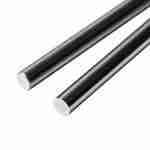
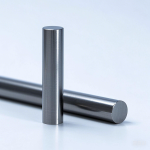
A carbide rod — also called a tungsten carbide rod or carbide round blank — is a cylindrical billet produced by sintering tungsten carbide (WC) powder with a cobalt (Co) binder through a powder metallurgy process. It serves as the primary raw material for manufacturing solid carbide end mills, carbide drills, reamers and other precision cutting tools. Compared to HSS, carbide rods offer hardness of HRA ≥ 92 and heat resistance above 800 °C — making them the preferred substrate for high-speed and hard-material machining.
Tungsten Carbide Composition and Grain Structure
Two parameters define the performance of a carbide rod: WC grain size and Co content.
- Finer grain size (≤ 0.5 μm, ultrafine) → higher hardness, stronger edge chipping resistance → suited for finishing and hard materials
- Higher Co content → greater toughness, better impact resistance → suited for interrupted cuts and roughing
JYC Carbide rod substrate: grain size ≤ 0.4-0.8 μm, hardness HRA ≥ 92, TRS ≥ 3,800 MPa. Exact Co content varies by grade; confirm during RFQ.
Common Grades — H10F, YG6X, YG8 and When to Use Each
| Grade | Grain Size | Co Content | Hardness | Recommended Application |
|---|---|---|---|---|
| H10F | Ultrafine ≤ 0.5 μm | 8–12% (confirm with engineer) | HRA ≥ 92 | Precision end mill / drill blanks, HRC 45+ hard materials |
| YG6X | Fine grain | 8–12% (confirm with engineer) | HRA ≥ 92.5 | Finishing tools, cast iron, non-ferrous metals |
| YG8 | Medium grain | 8–12% (confirm with engineer) | HRA ≥ 91 | General machining, interrupted cuts, roughing |
Grade classification reference: ISO 513 P/M/K/S/H/N material groups.
⚠️ Grade selection depends on workpiece material, cutting conditions and tool geometry. If unsure, contact our engineers before ordering.
Carbide Rod Specifications — Diameter, Length and Tolerance
JYC Carbide carbide rod specifications cover diameters from Ø1 mm to Ø25 mm and lengths from 50 mm to 330 mm, meeting blank requirements for most standard CNC cutting tool production.
Standard Diameter Range and Tolerance
Factory diameter tolerance (measured at shipment):
- D ≤ 12 mm: 0 to 0.020 mm
- D > 12 mm: 0 to 0.030 mm
- Shank diameter tolerance: h6 per ISO 286-1
- Radial runout: ≤ 0.05 mm (100% inspection)
| Diameter (mm) | Length (mm) | Coolant Hole Options |
|---|---|---|
| Ø3 / Ø4 / Ø5 / Ø6 | 50 / 100 | Blank / Straight hole |
| Ø8 / Ø10 / Ø12 | 100 / 150 / 200 | Blank / Straight / Helical |
| Ø16 / Ø20 / Ø25 | 150 / 200 / 330 | Blank / Straight / Twin-hole |
Non-standard sizes available. Provide diameter, length, coolant hole type and grade requirements during RFQ.
Coolant Hole Options — Straight, Helical and Twin-Hole
- No hole: For end mills and drills that do not require internal coolant
- Straight hole: For straight-flute drills; coolant delivered directly to the cutting edge
- Helical hole (30° / 40° / 45°): For spiral-flute drills; specific helix angle — confirm with engineer during RFQ
- Twin-hole: For large-diameter deep-hole drills; dual-channel coolant supply
The coolant hole helix angle must match the intended tool’s flute helix angle. Provide your tool drawing during RFQ for confirmation.
Applications — Where Carbide Rods Are Used
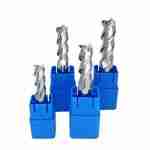
A carbide rod is the starting point for every TiAlN coated end mill and solid carbide drill. From blank to finished tool, the process involves OD grinding, flute grinding, edge preparation and coating. The quality of the blank sets the precision ceiling for the finished tool.
Need a carbide rod matched to your specific tool design? Contact JYC Carbide via WhatsApp +86-189-2679-8587 with your tool drawing or specification. We will provide a tailored recommendation during the RFQ stage.
CNC End Mill and Drill Blank Manufacturing
Typical scenario: A job shop producing Ø6 mm four-flute end mills for machining NAK80 pre-hardened steel (HRC 40).
Failure mode (based on customer feedback): Blanks labeled H10F but with inconsistent grain distribution. After grinding, edge chipping appeared under magnification. Finished tool life on NAK80 reached only 40% of the expected value.
Root cause: Non-uniform grain size → localized hardness drop → micro-cracks at the cutting edge during grinding → accelerated chipping in service.
Solution: Specify ultrafine-grain blanks (≤ 0.5 μm) with FEI SEM inspection for grain uniformity. JYC Carbide uses FEI scanning electron microscope for substrate grain inspection and ships with a CMM inspection report.
Boundary condition: This recommendation applies to precision tool manufacturing. For roughing tools requiring higher toughness, a higher Co content grade may be more appropriate — confirm with our engineers.
Mold and Die Tooling Applications
Mold making demands dimensional consistency and hardness stability across the batch. Mold cavity work typically uses Ø3–Ø12 mm blanks ground into ball-nose end mills for machining hardened steels such as SKD11 (HRC 60+).
JYC Carbide blanks at D ≤ 12 mm hold 0–0.020 mm tolerance with 100% runout inspection (≤ 0.05 mm), ensuring consistent grinding stock across the batch.
General Machining and MRO Applications
In general machining and MRO environments, carbide rods are used to produce standard drills and carbide reamers for carbon steel, alloy steel, cast iron and aluminum. YG8 grade typically offers the best balance of performance and cost for interrupted cuts and mixed-material work.
How to Select the Right Carbide Rod Grade
There is no single “best” grade. The right choice depends on three conditions: workpiece hardness, cut type (continuous vs. interrupted) and cooling method.
Grade-to-Workpiece Matching Matrix
| Workpiece Hardness | Cut Type | Recommended Grade | Reason |
|---|---|---|---|
| ≤ HRC 35 (carbon / alloy steel) | Continuous | YG6X | High hardness, sharp edge, suited for finishing |
| HRC 35–45 (pre-hardened steel) | Continuous | H10F | Ultrafine grain, strong chipping resistance |
| HRC 45–62 (hardened steel) | Light cuts | H10F | High hardness, wear resistance; requires low depth of cut |
| Cast iron / non-ferrous | Continuous | YG6X | Wear resistance priority |
| Interrupted cuts / roughing | Any | YG8 | Higher toughness, impact resistance |
⚠️ These are general guidelines. Actual selection should account for machine rigidity, coolant type and tool geometry. Please confirm with our engineers during RFQ.
Common Mistakes When Sourcing Carbide Blanks
- Choosing on price alone without requesting a grain size report: Grain size cannot be assessed visually. Always request FEI SEM inspection data or a grain size certificate.
- Ignoring diameter tolerance: Oversize blanks leave insufficient grinding stock. Confirm the supplier’s tolerance standard and 100% inspection capability.
- Coolant hole helix angle mismatched to tool design: Provide your tool drawing during RFQ to confirm compatibility.
Quality Assurance — What to Verify Before You Order
Certifications, COC and Inspection Reports
Every JYC Carbide shipment includes an outgoing inspection report (measured values for diameter, length and runout) and a Certificate of Conformance (COC).
Note: SGS third-party inspection reports are available on request and subject to additional fees. Specify during RFQ if required.
Quality certifications: ISO 9001 certified carbide tools — ISO 9001 / ISO 14001 / ISO 45001 / ISO 50001
JYC Carbide Manufacturing Capability
- Brand: JYC Carbide / Jinyuchang Industrial Technology Co., Ltd
- Production base: 270,000 m²
- Vertical integration: Tungsten oxide → WC powder → pressing → sintering → grinding — all core processes in-house
- Annual output: 5,000 tonnes carbide powder / 1,200 tonnes carbide rod
- Measurement: ZOLLER / Laser OD / FEI SEM / CMM
- Active customers: 1,200+ across 40+ countries
FAQ
What is a carbide rod used for?
A carbide rod is the primary blank material for manufacturing solid carbide cutting tool blanks including end mills, drills, reamers and boring bars. It is also used for mold punches, wear-resistant components and precision gauging tools. The blank is processed through OD grinding, flute grinding, edge preparation and PVD/CVD coating to produce a finished cutting tool ready for CNC machining.
What is scrap carbide worth today?
Scrap carbide value is directly tied to the tungsten carbide (WC) raw material market, which fluctuates with tungsten ore supply, global manufacturing demand and currency exchange rates. For current scrap pricing, contact a local metal recycler or carbide manufacturer for a real-time quote. JYC Carbide does not offer scrap recycling services, but we can provide competitive pricing on new carbide rod stock.
Why is carbide getting so expensive?
Three factors drive carbide price increases: (1) tungsten ore supply is highly concentrated — approximately 80% of global production comes from China — creating supply chain risk premiums; (2) recovering global manufacturing activity has increased demand for cutting tools; (3) rising energy costs have pushed up powder metallurgy production costs. Buyers can partially offset price volatility by locking in long-term supply agreements or maintaining strategic safety stock.
Request a Quote
Ready to source carbide rods? Provide the following and a JYC Carbide engineer will respond within one business day. We will provide a recommendation based on your specific workpiece conditions — not a generic catalog answer.
- Rod diameter / length / grade requirement
- Coolant hole type (none / straight / helical) and helix angle if applicable
- Quantity / target delivery date
- End use (tool type and workpiece material)
📱 WhatsApp: +86-189-2679-8587
Last updated: May 2026 | Reviewed by: JYC Carbide Engineering Team


Request a Quote for Carbide Tools