Industrial procurement teams frequently discover that dozens of vendors market themselves under the broad term tungsten carbide manufacturers, yet their actual operating capabilities, processing stages, and product scopes differ substantially. Comparing these vendors solely on catalog hardness values or headline unit prices creates substantial delivery and operational risk. Sintered blanks, ground rod blanks, finished cutting tools, and wear parts each require distinct production equipment, quality controls, and finishing capabilities.
To avoid sourcing failures, buyers must qualify suppliers for the specific component and application rather than relying on a broad search term alone. This means identifying the exact product category, auditing who holds manufacturing and inspection responsibility for each stage, and distributing a single, controlled technical specification package to every bidder. Final qualification depends entirely on part geometry, machining state, tolerance demands, order volume, and mutual acceptance criteria.

Which Type of Tungsten Carbide Manufacturer Do You Need?
Sourcing teams must classify vendors by their physical delivery stage rather than their marketing title. A company producing raw powders or sintered preforms operates differently from a facility grinding precision solid carbide end mills or brazing industrial wear components.
Sending a finished-tool print to a primary sintering facility or a rough blank inquiry to a specialized regrinding shop leads to long lead times, unnecessary subcontracting markups, or outright manufacturing errors.
Classification is verified by reviewing the supplier's actual delivery states, processing machinery, and past product history.
Match your required part state to the supplier tier before initiating detailed technical discussions.
In industrial purchasing, the term tungsten carbide refers to cemented carbide composite materials—typically tungsten carbide (WC) grains consolidated with a metallic binder such as cobalt—rather than pure chemical tungsten carbide powder. The International Tungsten Industry Association (ITIA) notes that cemented carbides represent the largest industrial use of tungsten due to their hardness and wear resistance. However, different applications demand entirely distinct manufacturing routes.
Vendors operating in this sector generally group into four manufacturing tiers: powder preparation and pressing plants, sintered blank and rod producers, cutting tool grinding facilities, and specialized wear-part fabricators. Some large operations integrate multiple stages, while many agile producers focus strictly on precision grinding from pre-sintered blanks or providing stock carbide rods for downstream toolmakers.
Clarifying where your component falls along this continuum ensures you request quotations only from facilities equipped with suitable pressing, sintering, cylindrical grinding, 5-axis CNC tool grinding, or surface finishing equipment.
| Procurement Target | Relevant Supplier Type | Buyer Inputs Required for Review | Must-Confirm Items Before PO |
|---|---|---|---|
| Sintered or Ground Rods / Blanks | Sintered blank / rod manufacturers or stockists | Diameter, length, ground or unground state, chamfer, target application | Stock allowance, straightness, diameter tolerance, surface finish, inspection standard |
| Finished Standard Cutting Tools | Precision CNC cutting tool manufacturers | Tool style, workpiece material, hardness, flute count, neck reach, coating needs | Shank tolerance, edge prep, runout criteria, packaging, application compatibility |
| Custom Cutting Tools | Custom carbide tool grinding manufacturers | Complete 2D part drawing with revision, CAD model, machining operation, tolerances | Grinding wheel access, critical datum planes, coating adhesion, inspection protocol |
| Industrial Wear Parts / Preforms | Wear-part fabricators or specialized carbide presses | Dimensional drawings, wear mechanism (abrasion, impact, corrosion), assembly method | Binder content compatibility, brazing or shrink-fit clearances, NDT / crack testing |
Decision checkpoint
- Do not assume every carbide vendor sinters their own material or grinds finished geometries.
- Confirm whether the supplier supplies rough sintered preforms, semi-finished ground stock, or fully coated finished tools.
How Do You Verify Manufacturing Scope and Supplier Responsibility?
Verify which production and quality inspection steps the vendor performs in-house and which steps they subcontract to external partners. Clear commercial titles like manufacturer, distributor, or supplier do not automatically reveal who holds technical liability for defective parts.
Unclear ownership across pressing, vacuum sintering, cylindrical grinding, PVD coating, or final dimensional inspection creates finger-pointing if tools fail prematurely or arrive out of tolerance.
Auditing process flow diagrams, internal inspection routing sheets, and direct technical confirmation letters reveals real shop-floor boundaries.
Require every candidate vendor to state their explicit operational boundaries in writing before accepting a formal quotation.
A vendor claiming full manufacturing capability may actually purchase sintered rod blanks from a primary sinter plant, grind the cutting geometry in-house, and outsource PVD thin-film coating to a commercial coating center. Another vendor might function as an engineering distributor who manages design and inspection while contracting the grinding operations.
Neither business model is inherently superior; an engineering-focused distributor with stringent incoming quality control can outperform a vertically integrated factory that lacks modern precision measurement equipment. When performing a carbide tool supplier evaluation, sourcing managers must confirm who audits incoming rod integrity, who validates flute geometry and edge preparation, and who bears replacement responsibility if a batch exhibits core porosity or dimensional drift.
When evaluating quality credentials, verify the specific legal entity, operating facility, and scope stated on ISO management certificates. Independent standards organizations such as ISO clarify that management certifications like ISO 9001 confirm the presence of a structured quality management system, but they do not serve as a product-level performance guarantee or proof of zero defects across individual machining batches.
| Supplier Claim | Documentary Evidence to Request | What the Evidence Proves | What the Evidence Cannot Prove |
|---|---|---|---|
| Full In-House Manufacturing | Facility equipment list, internal process routing sheet | Availability of necessary machinery on site | Process capability, yield rates, or operational uptime |
| ISO Quality Certified | Valid ISO 9001 certificate with active scope and site address | Presence of structured organizational quality procedures | Zero dimensional defects or guaranteed tool life in cut |
| Guaranteed Material Grade | Batch test report or raw material inspection sheet | Nominal metallurgical parameters for that production lot | Tool geometry accuracy or correct application fit |
| Precision Grinding Capability | Sample inspection report with measurement instrument details | Demonstrated capability to measure specified tolerances | Consistent tool performance under aggressive machine loads |
Decision checkpoint
- Check the certified address on third-party certificates to confirm it matches the production plant.
- Determine in advance whether coating, heat treatment, or EDM operations are performed internally or externally.
What Specifications Must Be Confirmed Before an RFQ?
An effective carbide RFQ requires complete technical parameters rather than generic trade designations. Submitting incomplete specifications forces vendors to insert arbitrary assumptions into their pricing.
Omitting key machining conditions, surface finish requirements, or tolerance limits results in wide quotation variances and post-order engineering redesigns.
Engineering review of the full part print, workpiece metallurgical state, and machine interface requirements.
Assemble a finalized engineering package before inviting quotes from qualified suppliers.
When purchasing standard cutting tools—such as solid carbide end mills, reamers, or drills—procurement must communicate the workpiece material, target hardness range, cutting environment (wet, dry, or MQL), spindle interface, and required tool reach. Supplying this data allows tooling engineers to review flute core rigidity, relief angles, and coating recommendations before quoting.
For custom wear parts or custom carbide tools, the RFQ must incorporate a 2D engineering drawing with explicit revision control, linear and geometric tolerances, surface roughness requirements (Ra), and critical functional datum surfaces. If a specific carbide grade is not designated, buyers should define the operating stress mode—such as heavy interrupted cutting, abrasive wear, or high thermal shock—and request a technical grade evaluation from the manufacturer.
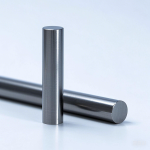
Where raw or semi-finished carbide rods are being procured, buyers must confirm whether they require unground sintered rods with rough stock allowance or precision ground rods held to tight diameter tolerances (such as h6 or h5), along with straightness parameters and chamfer details.
Decision checkpoint
- Always specify workpiece material grade and hardness rather than broad metal family names.
- State critical inspection datums on drawings so suppliers quote appropriate measurement setups.

Which Supplier Documents Are Useful—and What Do They Prove?
Suppliers generate various production, metallurgical, and inspection documents, but each serves a bounded purpose. Sourcing teams must distinguish between administrative marketing certificates and lot-specific inspection records.
Accepting generic marketing declarations in lieu of shipment-specific inspection records leaves procurement without recourse if parts fail drawing requirements.
Evaluating the traceability, batch identifiers, and actual recorded values against standard nominal limits.
Specify required documentation deliverables directly in the RFQ and purchase order terms.
A material test certificate typically documents density, hardness, coercive force, and magnetic saturation for a given sintered batch. These metallurgical metrics help confirm consistency of the tungsten carbide matrix and binder balance, but they do not verify edge prep radius, runout, or flute form.
Dimensional inspection records—generated via optical comparators, contact probes, or laser measurement machines—verify whether critical diameters, lengths, and angles meet print callouts. Buyers should examine whether inspection reports list actual measured values or merely stamp an unchecked pass result.
Formal deviation logs and engineering change notices (ECNs) are equally important documents. Reliable manufacturers document any minor deviation from the initial RFQ or print, obtaining written sign-off before proceeding with production.
- Material Batch Reports: Validate basic metallurgical density, magnetic properties, and sintered integrity.
- Dimensional Inspection Sheets: Document real physical measurements on finished critical features.
- Coating Thickness & Adhesion Data: Confirm thin-film surface treatment parameters when applied.
- Written Deviation Approvals: Provide clear commercial and technical agreement on print discrepancies.
Decision checkpoint
- Require dimensional inspection reports to include actual measured figures for tight-tolerance features.
- Never accept a generic brochure claim as proof of lot-level metallurgical verification.
How Can You Compare Tungsten Carbide Quotations Like for Like?
Direct unit price comparisons are misleading if vendors quote against different engineering baselines, raw blank grades, tolerance assumptions, or shipping terms. Normalizing quotations across technical and commercial line items is mandatory.
Selecting an apparently low bid that excludes tooling setup costs, surface coating, or freight creates unbudgeted operational expenses downstream.
Side-by-side audit of commercial terms, scope exclusions, batch minimums, and revision numbers.
Use an RFQ comparison matrix to identify missing items and unconfirmed assumptions before negotiating price.
When evaluating proposals from multiple tungsten carbide manufacturers, sourcing managers must systematically check for unstated exclusions. A lower price often reflects unground blank stock rather than ground rod, an uncoated tool where high-performance PVD coating was expected, or standard commercial tolerances where precision grinding was drawn.
Quotation terms must also detail non-recurring engineering (NRE) fees, minimum order quantities (MOQs), packaging methods, and agreed Incoterms. If one vendor includes 100% optical inspection and individual protective packaging while another quotes bulk pack with batch sampling, their manufacturing costs reflect distinctly different levels of quality assurance.
When reviewing quotes for carbide tooling or rod blanks from TUNGVARA at carbide-factory.com, engineering teams evaluate standard catalog offerings—including solid carbide end mills, drills, reamers, and rods—against stated workpiece criteria, ensuring technical fit before commercial confirmation.
| Comparison Parameter | Supplier Proposal A | Supplier Proposal B | Required Buyer Verification |
|---|---|---|---|
| Drawing Revision Level | Rev. C noted | Rev. B noted (outdated) | Align both vendors to latest drawing revision |
| Carbide Material / Grade | Specific grain size & binder stated | Trade brand only, no metallurgical data | Verify nominal hardness and TRS balance |
| Machining / Finishing State | Ground h6 finish with chamfered ends | Sintered blank with +0.5 mm stock | Confirm whether secondary machining is required |
| Coating Specification | AlTiN / TiAlN PVD included | Uncoated (bright finish) | Normalize pricing for identical surface treatments |
| Dimensional Inspection | 100% critical feature inspection sheet | AQL sample check only | Ensure quality assurance matches part risk tier |
| Freight & Delivery Terms | DAP destination named | EXW factory gate | Calculate net landed cost including import duties |
Decision checkpoint
- Flag any proposal that omits explicit drawing revision numbers or processing states as 'not confirmed'.
- Always calculate total landed cost, factoring in shipping, tooling setups, and potential secondary grinding.

How Should Samples and Repeat Orders Be Approved?
Prototype sample approval must follow a structured engineering test protocol, and repeat production orders require strict change-control management to prevent silent material or process substitution.
Relying on a single successful sample without defining re-order change limits exposes production lines to sudden tool breakage or premature wear on subsequent batches.
Empirical machining logs, measured tool wear progression, dimensional CMM data, and signed ECN agreements.
Establish an agreed sign-off workflow covering prototype trials, lot inspection standards, and mandatory advance notice of any manufacturing changes.
Qualifying a tungsten carbide supplier requires close collaboration between purchasing and engineering. The engineering department first establishes functional tolerances, material requirements, and acceptance limits. Purchasing then distributes the exact same data package to vetted vendors. When proposals return, technical teams audit any supplier deviations before approving prototype quantities.
During initial sampling, parts must be verified on coordinate measuring machines or optical inspection benches, followed by controlled machining trials under actual production parameters. Document tool life, chip evacuation behavior, spindle load, and surface finish. Because machining performance depends directly on machine tool rigidity, holder runout, coolant delivery, and setup stability, testing must take place under stable, documented conditions.
Securing sample approval does not automatically guarantee identical performance across future years of production. Repeat purchase contracts must specify that the manufacturer cannot alter raw powder sources, sintering cycles, grinding wheel geometries, or coating vendors without prior written notification and formal engineering requalification.
- Step 1 (Technical Package): Engineering locks drawing revisions, key datums, and operating boundaries.
- Step 2 (Controlled RFQ): Procurement collects proposals using an identical technical scope.
- Step 3 (Feasibility Review): Engineers evaluate vendor deviations, grain size proposals, and grinding limits.
- Step 4 (Sample Validation): Machining trials monitor tool wear, spindle load, and finished part tolerances.
- Step 5 (Change Agreement): The master purchase agreement mandates formal ECN notification for any process shift.
Decision checkpoint
- Never approve a production supplier based solely on static dimensional fit; validate dynamic cutting or wear performance.
- Require suppliers to give written notice before modifying sub-tier blank suppliers or PVD coating recipes.
Frequently Asked Questions
What is the difference between a tungsten carbide manufacturer and a distributor?
A manufacturer operates pressing, sintering, grinding, or EDM machinery to produce physical carbide blanks, rods, or cutting tools. A distributor warehouses, packages, and supplies products produced by third-party factories. Both can provide reliable quality, but buyers must verify who performs final inspection and who handles technical liability for quality defects.
Does an ISO 9001 certificate guarantee high-quality carbide tools?
No. An ISO 9001 certificate confirms that an organization maintains documented quality management processes. It does not certify specific tool geometry, metallurgical purity, flute runout, or operational cutting performance. Buyers must still specify and inspect critical dimensional tolerances and application criteria.
What key details should be included in a custom carbide tooling RFQ?
Inquiries should provide a controlled 2D drawing with complete tolerances, workpiece material grade and hardness, primary machining operation, tool reach, shank requirements, preferred coating type, target quantities, and any specialized inspection or packaging criteria.
Why do quotations for tungsten carbide rods vary so widely?
Price differences typically stem from the processing state (rough sintered blanks versus precision ground h6 rods), grain size distribution, binder content, raw material purity, and the extent of non-destructive metallurgical and straightness testing performed prior to shipment.
Discuss Your Tooling Requirement
Send the workpiece material, hardness, operation, tool diameter, reach, machine and holder details for a bounded tooling review.
Send your machining requirements to TUNGVARA.