Affordable Carbide Tools for CNC Machining in 2026
Affordable carbide tools for CNC machining can be a practical option for everyday roughing and semi-finishing work when the material, machine rigidity, and cutting conditions are matched correctly.


This guide explains where budget carbide tools make sense, where they do not, and how to evaluate them without relying on exaggerated claims.
What Do We Mean by “Affordable Carbide Tools”?
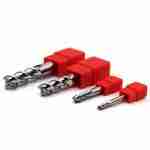
When we say affordable carbide tools for CNC machining, we are talking about practical solid carbide end mills and drills for everyday machining, not disposable, one-time tools.
JYC Carbide uses 0.4–0.8 μm fine-grain carbide substrate and proven second-generation PVD coatings such as AlTiN, nACo, and TiSiN to balance tool life, metal removal rate, and purchase cost on common steels, cast iron, and aluminum alloys.
If you already run US, EU, or Japanese brand tools on your lines, this type of product is usually positioned as:
A roughing / semi-finishing option in place of premium brands
A general-purpose tool for non-critical dimensions and everyday parts
The goal is to reduce overall tooling cost without putting critical dimensions or delivery schedules at unnecessary risk. Any actual savings should be confirmed with a real quote and cost-per-part review instead of a fixed percentage claim.
Recommended Materials for Everyday CNC Work
With reasonable cutting parameters, adequate machine rigidity, and normal coolant conditions, affordable carbide tools are best used on mainstream materials in routine production.
Carbon and Alloy Steels
Typical P-group workpieces include 1045, 4140, and 4340 in common quenched and tempered ranges. These are often good candidates for budget-conscious roughing and semi-finishing when you are not chasing ultra-tight finishing performance.
Stainless, Aluminum, Cast Iron, and More
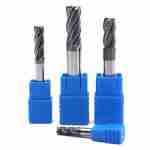
Stainless steel (M group, around ≤HRC32): 303, 304, 316 and similar non-hardened grades for brackets, flanges, cavities, and general structural parts, often better matched with a stainless steel end mill
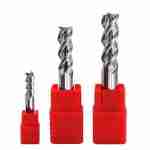
General aluminum alloys (N group): 6061, 6082, 2A12 and similar grades for frames, fixtures, and general aluminum components, where an aluminum milling cutter may be a stronger fit than a fully general-purpose geometry
Pre-hardened mold steels: P20, 718H, NAK80 and similar steels, typically in the HRC30–42 range
Gray and ductile iron (K group): HT250 / GG25, QT450 and similar grades used in housings, machine bases, and brackets
Brass and free-cutting copper alloys: H59 / H62, C3604 and similar materials used in fittings and connector parts
General engineering plastics: POM, PA66, ABS, PC and other common plastics used for covers, fixtures, and pre-machined components
Standard die-cast aluminum: ADC12, A380 and similar alloys used for gate removal and secondary machining
Limitations matter: for high-hardness steels (HRC55 and above), hardened tool steels, nickel-based superalloys, titanium alloys, or high-silicon aluminum, a dedicated high-performance series is usually the better choice. In these cases, it is safer to confirm the application with an engineer before changing tools.
Typical Use Cases: Where Affordable Carbide Tools Fit Best
Affordable carbide tools are usually most effective in stable, repeatable operations where the process window is already under control and the goal is to balance performance with tooling cost.
Common Shop-Floor Applications
Bulk roughing and semi-finishing on 3C structural parts and electronic housings
Roughing and intermediate machining of stamping dies, progressive dies, and blanking die inserts
Roughing of mold frames and base components for automotive tooling
General-purpose use in job shops handling small-batch, high-mix orders
90-degree corners, chamfers, and V-grooves on aluminum profiles and structural extrusions
Non-mirror-finish cavity machining and stock removal for plastic injection molds
Training, prototyping, and fixture making in schools, labs, and makerspaces
Where They Usually Make Sense
For tight-tolerance, high-value features, it is usually better to keep using the premium tools you already trust.
For material removal and medium-tolerance work, affordable carbide tools can be a practical way to reduce cost per part.
Seven Practical Advantages Without the Marketing Hype
Instead of broad claims like “best” or “number one,” it is more useful to look at the practical reasons buyers consider affordable carbide tools in the first place.
More Controllable Tooling Cost
Compared with mainstream US, EU, and Japanese carbide brands in similar geometries, JYC Carbide tools are typically priced more competitively. The exact gap depends on tool size, coating, order quantity, and your current supplier pricing, so it should be verified through quote comparison and cost-per-part analysis.
More Stable Life and Size Control Than HSS
On common carbon steels and alloy steels, and with proper machine rigidity and coolant, carbide tools normally provide more stable tool life and dimensional control than traditional HSS tools. That usually makes them a better fit for repeat production and higher-volume work.
Actual tool life still depends on Vc / SFM, fz / IPT, ap, ae, clamping method, coolant strategy, and spindle condition. It is better to validate performance on your own parts than to rely on generic “X times life” claims.
Stock on Common Sizes
For standard end mill and drill sizes, JYC Carbide keeps ongoing stock based on historical demand. If stock is available and the PO is confirmed, shipment can usually be arranged quickly.
For non-standard tools or larger batch orders, lead time should always be confirmed in writing.
Proven Coatings for Medium to Higher Cutting Speeds
Using PVD coatings such as AlTiN, nACo, and TiSiN, these tools can cover many dry and wet cutting needs on medium carbon steels, alloy steels, and cast iron. Under reasonable cutting speed and feed ranges, the coating helps reduce flank wear and chipping while supporting repeatable tool life.
Coating performance still depends on the exact alloy, tool geometry, coolant conditions, and cutting load, so it should be evaluated in the actual process window rather than assumed from a headline claim.
Dimensional Tolerances and Runout in a Practical Industrial Range
For solid carbide end mills with diameters D ≤ 12 mm, JYC Carbide can control cutting diameter tolerance in the range 0 to +0.020 mm. For D > 12 mm, typical diameter tolerance is 0 to +0.030 mm.
Radius tolerance can be held within ±0.01 mm, and shank tolerance follows h6 according to ISO 286-1. For D ≤ 12 mm, runout can be controlled to ≤0.05 mm under the stated specification window.
When combined with correct toolholding and a spindle in good condition, this range is generally suitable for most roughing and standard semi-finishing work where ultra-tight tolerance is not the main priority.
If you need special profiles, custom shank dimensions, or step tools, JYC also supports custom carbide tools.
How to Use Affordable Carbide Tools in the Right Places
To get a useful result from an affordable carbide line, the key is not just price. The real question is whether the tool is being used in the right material, on the right machine, and in the right process window.
Aluminum, Stainless, and Lower-Rigidity Setups
Aluminum machining: For 6000-series and similar alloys, choose polished flutes and aluminum-oriented geometry to reduce built-up edge (BUE). At higher spindle speeds, chip evacuation matters as much as edge sharpness, and a 2-flute ball end mill for aluminum can be more suitable in some contouring jobs.
Stainless steel: On 304 and 316, it is often safer to reduce cutting speed and feed per tooth moderately compared with carbon steel in order to control heat and reduce BUE.
Low-rigidity setups: On smaller VMCs, older machines, or flexible fixturing, avoid heavy full-slot cuts with large ae and ap. Side-milling with smaller radial engagement is usually more stable.
Runout, Tool Separation, and Harder Materials
Runout control: Checking TIR / runout on incoming tools is good practice, especially before critical features.
Separate roughing and finishing tools: Let the rougher run deeper into its wear window, and replace the finishing tool earlier to keep size and surface quality more stable.
Harder materials: For HRC45–65 steels, quenched die steels, or heat-resistant alloys, a dedicated hardened steel end mill is usually more reliable than pushing a general-purpose affordable tool beyond its intended range.
If your shop handles interrupted cuts, thin-wall parts, high-speed finishing, or demanding surface requirements, trial cuts and parameter tuning are strongly recommended before full production release.
Factory Capabilities and Quality Control
JYC Carbide operates roughly 270,000㎡ of manufacturing space and serves customers in 40+ countries. The product range covers 5,000+ SKUs, supports 1,200+ active customers, and totals 40 million pieces delivered.
Production and Measurement Equipment
Grinding equipment: P3 WALTER / ANCA / ROLLOMATIC
Measurement equipment: ZOLLER / Laser / FEI / CMM
Management Systems and Documents
Quality systems follow ISO 9001 / 14001 / 45001 / 50001. Standard inspection reports can be provided with shipment.
If you require COC or third-party verification such as SGS, that should be discussed during RFQ. These are not assumed as default shipment documents, and additional cost or feasibility may need to be confirmed in advance.
When It Makes Sense to Shift Budget from Premium Tools
If you currently rely on premium tooling but need better overall tooling economics, affordable carbide tools often make the most sense in stable, repeatable work where the process is already known and the tolerance target is moderate.
Lower-value parts that run in higher volume
Features with moderate tolerance and reasonable surface finish targets
Long-running jobs that do not require your highest-tier tooling on every operation
A practical switching method is to start with one or two reference parts and compare:
Whether tool life stays acceptable at the same takt time
Whether tooling cost per part actually decreases
Whether cycle time, scrap rate, or rework risk changes after the switch
Once you have data from a few controlled jobs, it becomes easier to decide which features should stay on premium tools and which ones can move to a more cost-sensitive option.
How to Ask for a Useful Quote
When you contact a carbide tool supplier, the fastest way to get a useful recommendation is to give enough application detail up front. That usually means:
Material grade and hardness range
Machine type, such as BT40 VMC, gantry, turning center, or mill-turn
Operation type: roughing, semi-finishing, or finishing
Current tool brand, average life, and the main problem you want to improve
You can contact JYC Carbide through the website RFQ message page.
Any expectation around tool life, delivery schedule, or cost reduction should be confirmed in written parameters and quotation. This page does not make blanket promises about guaranteed life, guaranteed savings, or zero-risk results.
We will provide suggestions based on your specific materials and cutting conditions.
FAQ: Affordable Carbide Tools for CNC Machining
Are affordable carbide end mills suitable for finishing critical dimensions?
They can be used for some finishing operations, but they are usually better positioned for roughing and semi-finishing unless the process has been validated on your machine and material. For high-value or tight-tolerance finishing features, many shops still prefer premium or dedicated finishing tools.
How do affordable carbide tools compare with HSS in tool life and cost per part?
On common steels and stable setups, carbide tools usually provide better wear resistance and more stable size control than HSS. The actual cost-per-part result depends on tool price, cycle time, edge life, machine rigidity, and cutting parameters, so the best approach is a controlled comparison on your own jobs.
When are affordable carbide tools a good choice?
They work best for roughing and semi‑finishing on common steels, cast iron and aluminum when your machine is reasonably rigid and parameters are under control.


Request a Quote for Carbide Tools