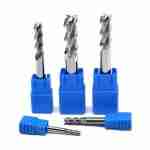
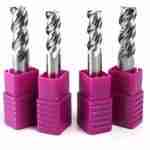
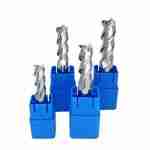
CNC Corner Radius End Milling Tool Picture

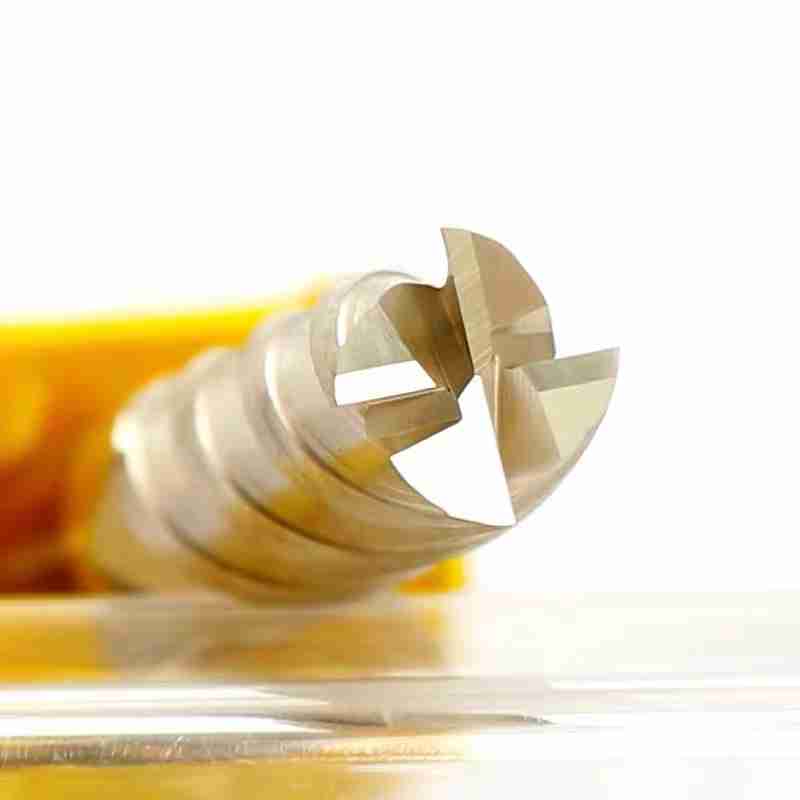
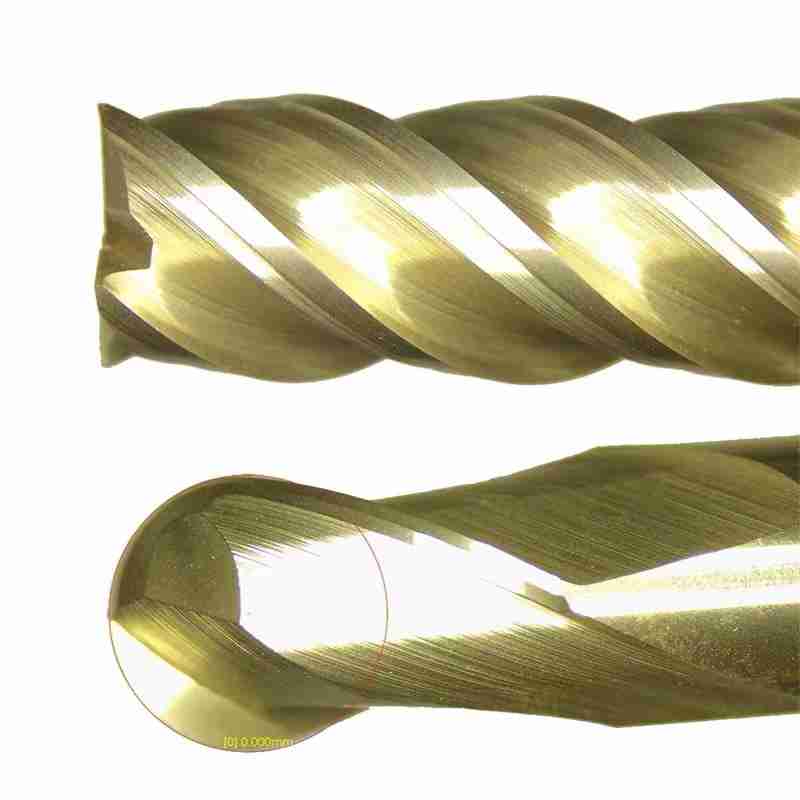
CNC Corner Radius End Milling Tool Details
| Customization: | Available |
|---|---|
| Precision: | High Precision |
| Controlling Mode: | CNC |
Engineered for Strength and Precision: The CNC Corner Radius End Milling Tool
Our advanced CNC Corner Radius End Milling Tool can enhance your machining capabilities, specifically designed to overcome the limitations of sharp-cornered end mills. This professional-grade tool features a unique radiused edge design that significantly improves cutting edge strength and distributes stress more effectively. As a result, it dramatically reduces the risk of chipping and extends tool life, even when machining challenging materials like hardened steels and titanium alloys.
Furthermore, this versatile CNC Corner Radius End Milling Tool produces superior surface finishes in contour milling and pocketing operations. The radiused corners create smooth transitions between surfaces, eliminating the need for additional finishing steps in many applications. Additionally, its optimized geometry ensures efficient chip evacuation and reduced vibration during operation. For manufacturers seeking to improve productivity and part quality, this reliable CNC Corner Radius End Milling Tool delivers exceptional performance in mold making, aerospace components, and high-precision mechanical parts, making it an indispensable solution for modern machining centers.
Overview of CNC Corner Radius End Milling Tool
| 1. Product Name: CNC Corner Radius End Milling Tool | |||
| 2. Standard size: 4mm,6mm,8mm,10mm,12mm,14mm,16mm,18mm,20mm | |||
| 3. Advantages: High Precision, Good Surface & Performace | |||
| Material: | YG10X /MH10FS&UH8(China)/K44 & K40 (German)/K44UF&K88UF(Cobalt collar) | ||
| Material: | Tungsten Carbide | ||
| HRC: | 45/55/58/60/65 | ||
| Product Type: | Titanium alloy high hardness solid carbide milling cutter | ||
| Coating: | Altin, Tialn, Tisin, Tin, DLC,Nano, Diamond | ||
| Helix Angle: | 10degree,15degree,25degree,35degree,45degree,55degree | ||
| Size: | Standard size or as your request | ||
| machine: | Imported Australian Anka machines and German Walther precision manufacturing | ||
| Suitable For: | Stainless steel, die steel, titanium alloy, hardened steel, etc. | ||
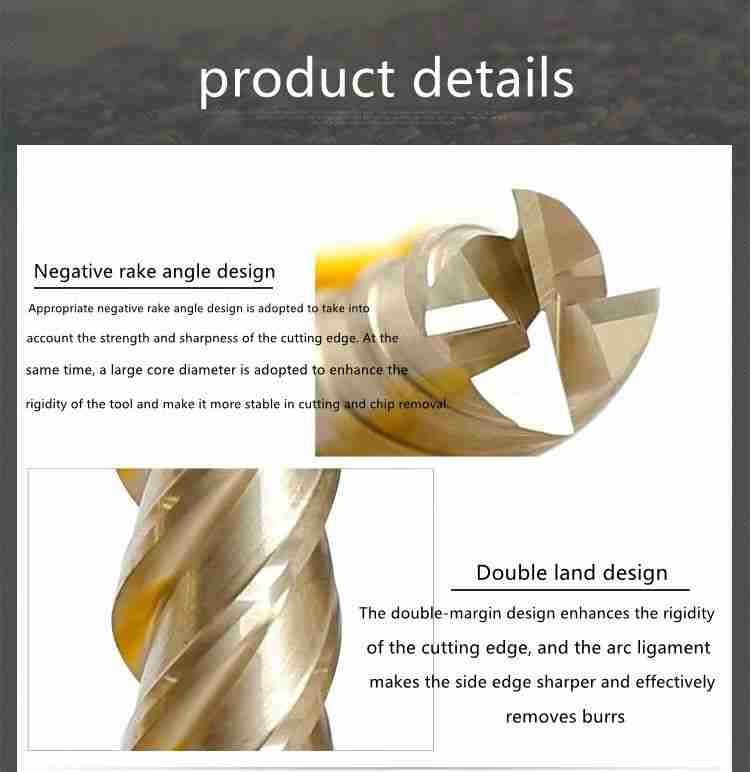
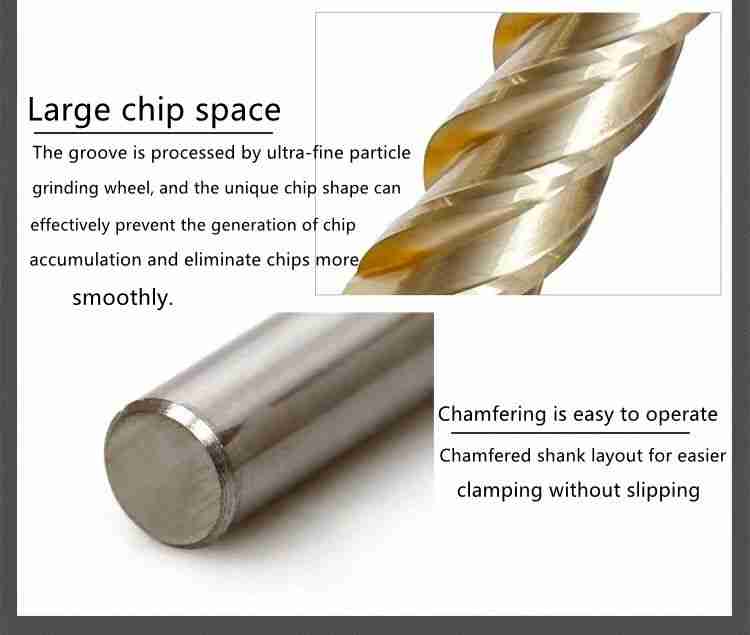
CNC Corner Radius End Mill vs Square End Mill vs Ball Nose End Mill: Professional Performance Comparison
| Comparison Item | Square End Mill | Ball Nose End Mill | Corner Radius End Mill | Core Advantages of Corner Radius End Mill (Supported by Actual Tests) |
|---|---|---|---|---|
| Tool Tip Design | 90° right angle | Full spherical surface (R = tool radius) | Fixed corner radius (R0.2~R6.0mm optional) | Combines planar rigidity with smooth corner transition, multi-purpose in one tool |
| Stress Distribution | Highly concentrated, prone to chipping | Dispersed but small planar cutting area | Evenly dispersed, significant edge strength improvement | Effectively reduces stress concentration points, greatly enhanced chipping resistance |
| Tool Life | Baseline (under identical parameters) | Shorter in planar machining | Typically extended 25%-50% (higher for hard materials) | Longest service life, lowest tool change frequency |
| Planar Machining Efficiency | High (large-area cutting) | Low, prone to marks | High (retains flat-end characteristics) | Fewer passes required, highest machine utilization rate |
| Corner/Curved Surface Machining | Requires secondary corner-clearing pass | Excellent (ideal for pure 3D surfaces) | Direct one-pass R-corner forming, no secondary operation | Simplest process, significantly reduced machining time |
| Surface Quality | Average (Ra approx. 0.8μm) | Excellent on curves, but planar marks common | Ra stably ≤0.4μm (best for plane + corner transitions) | Most consistent and smooth finish, ideal for “plane + corner” parts |
| Applicable Scenarios | Pure planar rough/finish machining | Complex 3D surfaces (e.g., impellers, mold cavities) | Plane + corner structural parts (phone mid-frames, automotive wheel molds, aerospace components) | Single-setup, single-forming; best match for modern precision parts |
| Material & Coating | Standard carbide + basic coating | Same basic coating | Ultra-fine grain carbide + TiAlSiN/AlCrN nano coating (common high-end configuration) | Superior heat resistance, excellent oxidation and adhesion resistance |
| Cutting Environment Adaptability | Conventional speeds, mainly wet cutting | Medium-high speed, MQL compatible | High speeds (12,000-20,000 rpm), stable in dry cut/MQL | Strongest environmental adaptability, suitable for various materials |
| Overall Processing Cost | Higher (more operations, shorter life) | Moderate (higher tool cost, lower efficiency) | Lowest (long life + high efficiency) | Significant cost amortization, top choice for cost reduction and efficiency |
FAQ
How does a corner radius end mill differ from a square end mill?

It features a fixed corner radius (R0.2–R6mm) instead of a sharp 90° edge, distributing stress evenly for 25-50% longer life and reduced chipping; square end mills suit applications needing exact sharp corners.
How do you set speeds and feeds for a corner radius end mill?

Consult manufacturer charts (e.g., Harvey Tool). Start with parameters similar to square end mills, but allow slightly higher feeds due to stronger edges; adjust for material, coating, and rigidity using calculators—test conservatively.
When to use corner radius end mill?

Use for parts needing filleted transitions, hard materials under high stress, or plane + corner features to boost efficiency and finish. Choose square end mills only for mandatory sharp 90° corners.
For Precision Carbide End Mills, feel free to contact us and request a quotation today. Alternatively, leave a message to schedule your complimentary expert consultation and obtain customized carbide solutions.


Request a Quote for Carbide Tools