Hard Material Specific Two Blade Ball End Mill Products Overview
Hard Material Specific Two Blade Ball End Mill is a cutting tool tailored for machining high-hardness materials, specifically addressing the challenges of cutting hard-to-machine materials such as quenched steel, cemented carbide, and high-strength stainless steel. It finds extensive application in mold manufacturing, aerospace component processing, and precision machining.
The tool body utilizes high-purity, ultra-fine-grain cemented carbide, enhanced through specialized heat treatment to achieve a hardness exceeding HRA 93. It delivers outstanding wear resistance and impact toughness. When machining high-hardness workpieces in the HRC 55-65 range, it maintains stable cutting performance without the chipping or rapid wear common to standard tools, significantly improving machining stability.
Products Pictures

Core Highlight of the Hard Material Specific 2 Flute Ball End Mill
The double-edged design is its core highlight for machining hard materials: the symmetrical tooth layout enhances tool body rigidity, minimizing vibration and runout during cutting to ensure machining accuracy. Simultaneously optimized helix angle and rake angle reduce cutting resistance, enabling high-speed machining while minimizing material adhesion to the tool. This facilitates smoother chip evacuation, preventing tool damage or surface scratches caused by poor chip clearance.
The ball nose section employs precise circular arc grinding, delivering high surface finish and dimensional accuracy on the spherical surface. This makes it particularly suitable for semi-finishing and finishing complex contours like curved surfaces, cavities, and circular grooves. Workpieces machined with this tool achieve surface roughness below Ra 0.8μm, virtually eliminating the need for subsequent polishing and saving one machining step.
The tool surface can be optionally coated with TiAlN/TiSiN composite coatings to enhance lubricity and high-temperature resistance, withstanding cutting temperatures up to 1100°C. This extends tool life by 3-5 times compared to uncoated tools. The shank employs high-precision grinding for superior fit with machine tool spindles, ensuring secure clamping and further enhancing machining stability.
Whether for cavity finishing in mold steel dies, contour machining of carbide components, or surface milling of high-strength metals, the “Hard Material Specific Two Blade Ball End Mill” delivers outstanding cutting performance, precise machining results, and extended tool life. It helps manufacturers boost productivity and reduce tool replacement costs, making it a practical choice for hard material machining.
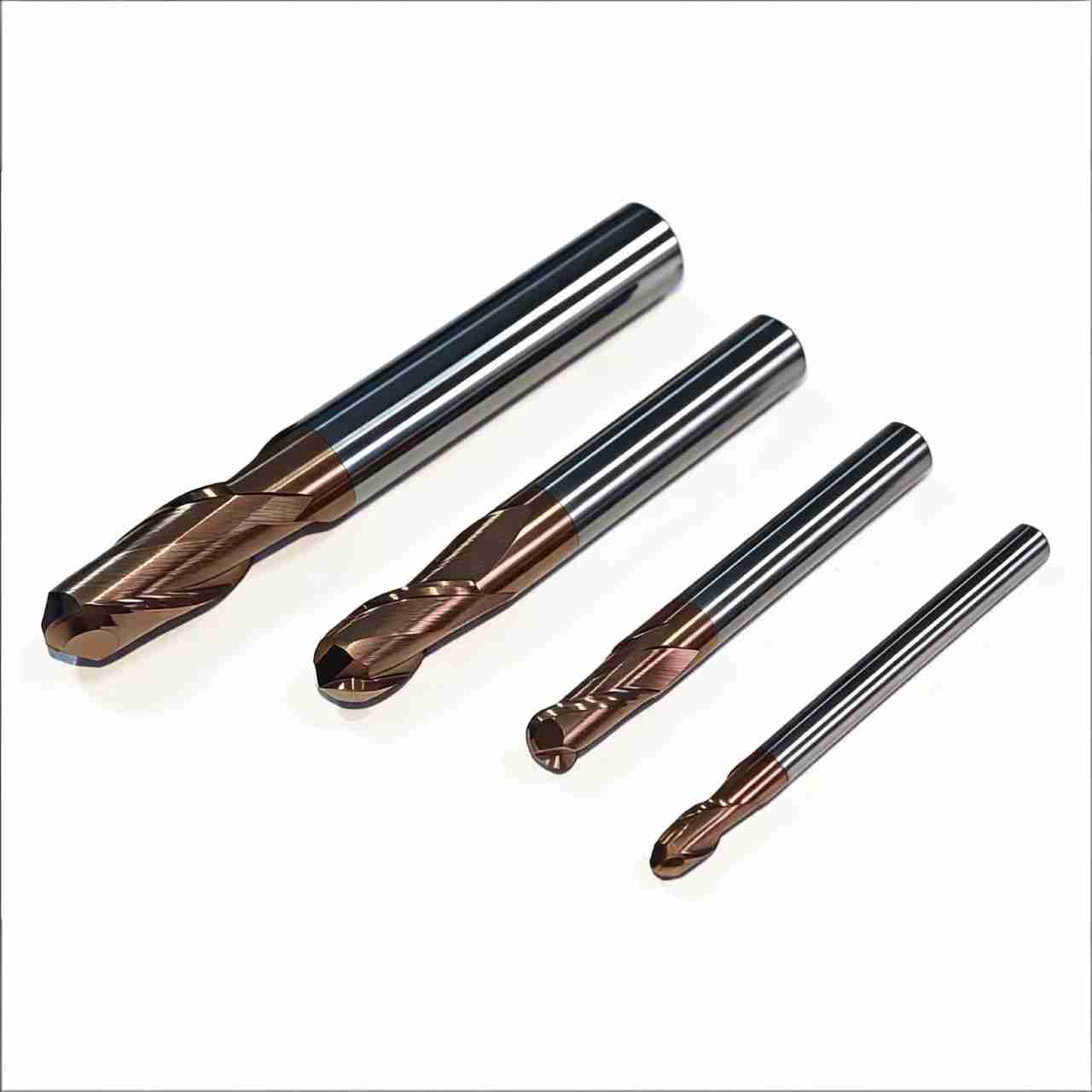


Hard Material Specific Two Blade Ball End Mill Detail:
| Product item NO. | NCH-2B |
| Product Name | Hard Material Specific Two Blade Ball End Mill |
| Usage | General High Speed Cutting for Metal |
| Type | End Mill,Coating,Customized(Altin, Tialn, Tin, Nano, etc) |
| Customized Support | OEM, ODM, Obm |
| Coating | Coating |
| Structure | Integral |
| Material | Cemented Carbide |
| Transport Package | Plastic Box/Customers’ Request/Carton |
| Trademark | Jin Ta Pai |
| Origin | China |
| HS Code | 8207709000 |
| Controlling Mode | CNC |
| MOQ | Flexible |
| Suitable for | Finishing Process |
| Flute | 2Flute |
| Flute Diameter | 0.2-25.4mm |
| Spiral Angle | 30° |
| Over All Length | 50-100mm |
| Precision | 0.005~-0.01mm |
| HRC | 65HRC |
| Production Capacity | 50000piece/Pieces Per Month |
| Grade | YK35SF |
| Tooth Form | Spiral Tooth |
| Processing Type | Metal |
| Run out | Less Than 0.003mm |
Hard Material Specific Two Blade Ball End Mill Parameter and Available dimensions:
Hard Material Specific Two Blade Ball End Mill

- Suitable for profile milling
- Most commonly used for high-speed cutting and dry cutting


Spiral Angle: 35° Coating:NaNoTiAlXN
| Item NO. | Dimensions (mm) | Number of teeth | Shape | ||||
| D | R | d | H | L | |||
| NCH-2B-R0.5S | 1.0 | 0.5 | 4 | 2 | 50 | 2 | PIC.1 |
| NCH-2B-R0.75S | 1.5 | 0.75 | 4 | 3 | 50 | 2 | PIC.1 |
| NCH-2B-R1.0S | 2.0 | 1.0 | 4 | 4 | 50 | 2 | PIC.1 |
| NCH-2B-R1.25S | 2.5 | 1.25 | 4 | 5 | 50 | 2 | PIC.1 |
| NCH-2B-R1.5S | 3.0 | 1.5 | 4 | 6 | 50 | 2 | PIC.1 |
| NCH-2B-R2.0S | 4.0 | 2.0 | 4 | 8 | 50 | 2 | PIC.2 |
| NCH-2B-R0.5 | 1.0 | 0.5 | 6 | 2 | 50 | 2 | PIC.1 |
| NCH-2B-R0.75 | 1.5 | 0.75 | 6 | 3 | 50 | 2 | PIC.1 |
| NCH-2B-R1.0 | 2.0 | 1.0 | 6 | 4 | 50 | 2 | PIC.1 |
| NCH-2B-R1.25 | 2.5 | 1.25 | 6 | 5 | 50 | 2 | PIC.1 |
| NCH-2B-R1.5 | 3.0 | 1.5 | 6 | 6 | 50 | 2 | PIC.1 |
| NCH-2B-R1.75 | 3.5 | 1.75 | 6 | 8 | 50 | 2 | PIC.1 |
| NCH-2B-R2.0 | 4.0 | 2.0 | 6 | 8 | 50 | 2 | PIC.1 |
| NCH-2B-R2.5 | 5.0 | 2.5 | 6 | 10 | 50 | 2 | PIC.1 |
| NCH-28-R2.75 | 5.5 | 2.75 | 6 | 12 | 50 | 2 | PIC.1 |
| NCH-2B-R3.0 | 6.0 | 3.0 | 6 | 12 | 50 | 2 | PIC.2 |
| NCH-2B-R3.5 | 7.0 | 3.5 | 8 | 14 | 60 | 2 | PIC.1 |
| NCH-2B-R4.0 | 8.0 | 4.0 | 8 | 16 | 60 | 2 | PIC.2 |
| NCH-28-R4.5 | 9.0 | 4.5 | 10 | 18 | 75 | 2 | PIC.1 |
| NCH-2B-R5.0 | 10 | 5.0 | 10 | 20 | 75 | 2 | PIC.2 |
| NCH-2B-R6.0 | 12 | 6.0 | 12 | 24 | 75 | 2 | PIC.2 |
| NCH-2B-R7.0 | 14 | 7.0 | 14 | 28 | 75 | 2 | PIC.2 |
| NCH-2B-R8.0 | 16 | 8.0 | 16 | 32 | 100 | 2 | PIC.2 |
| NCH-2B-R10.0 | 20 | 10.0 | 20 | 40 | 100 | 2 | PIC.2 |
Testing Experiments and Application Cases
Testing Experiments: High hardness material processing end milling cutter of NCH Series
- High coating hardness and excellent high-temperature oxidation resistance make it more suitable for high hardness materials and high-speed machining fields
- Excellent coating treatment technology significantly improves the adhesion between the coating and the substrate.
- Unique tool structure and reasonable groove design achieve excellent cutting performance.
- Special surface treatment can effectively reduce friction, smooth chip removal, and improve the quality of the
- processed surface.
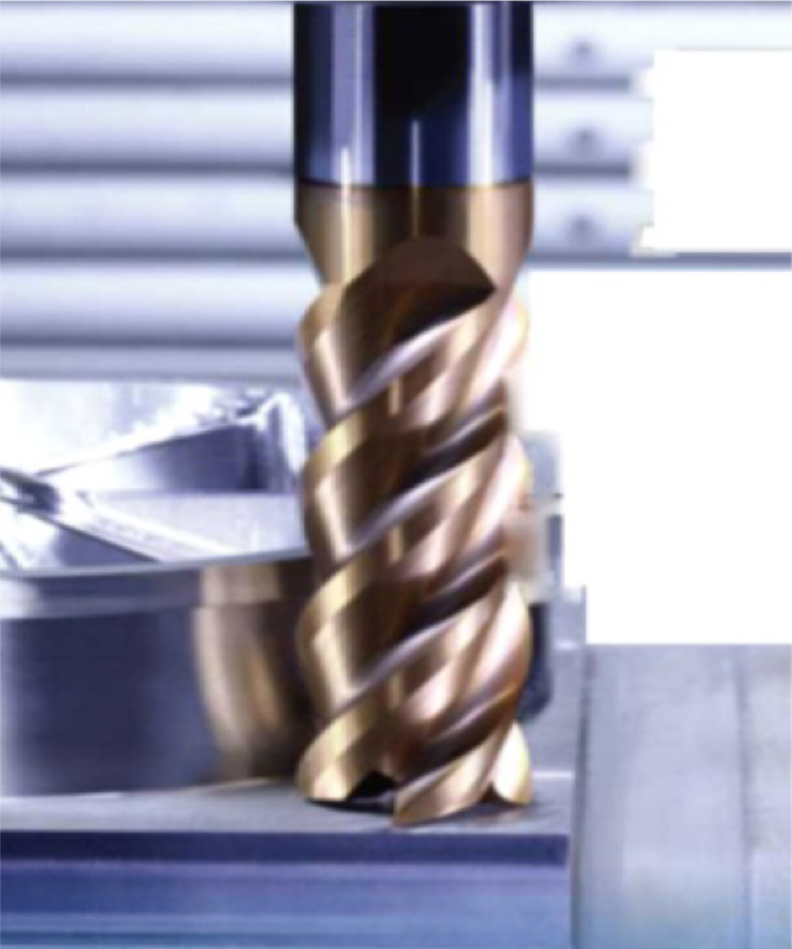
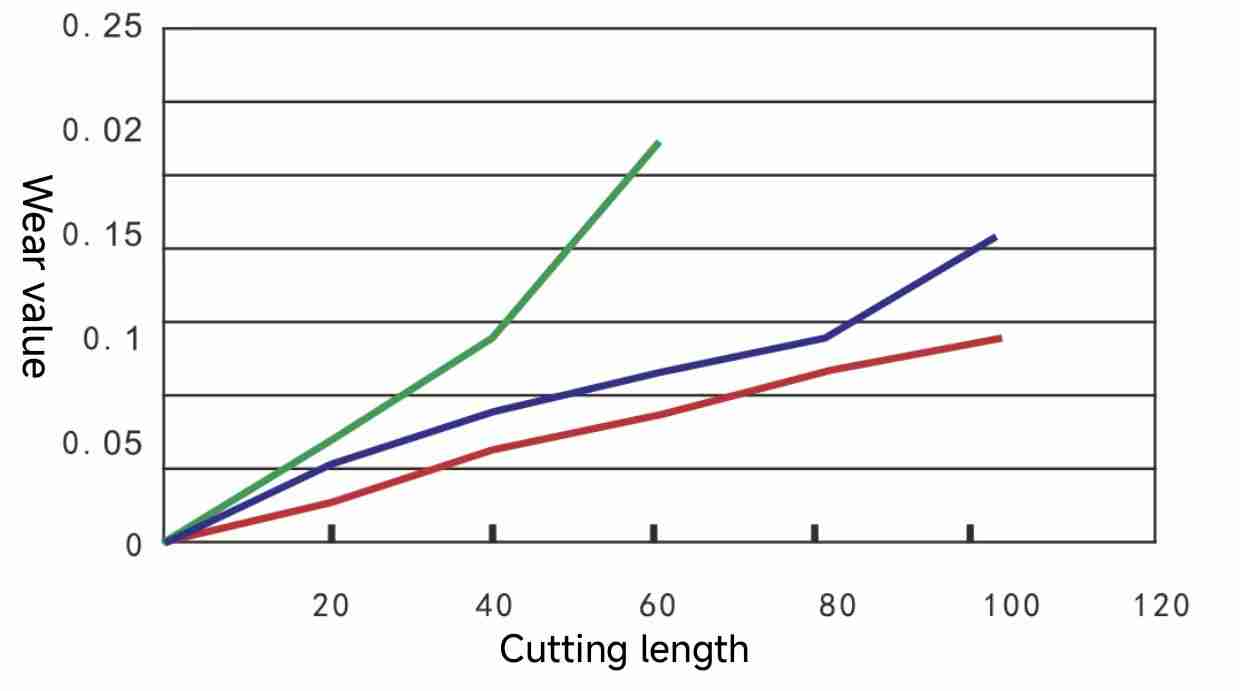
Application of NCH-4E-D8.0 Milling SKD11 (62HRC)
Longer tool life
——————————————
—————
——————
NCG-4E-D6.0
Similar products of Company A
Similar products of Company B
Tool model: NCH-4E-D8.0
Machined material: SKD11 (62HRC)
Cutting line speed: 90 m/min
Feed rate:0.2 mm/r
Axial cutting depth: ap=12mm
Radial cutting width: ae=0.2mm
Cooling method: air cooling
Application of NCH-2B-R3.0 Miling SKD11 (62HRC)
Better processing quality
——————————————
—————
——————
NCH-2B-R3.0
Similar products of Company A
Similar products of Company B
Tool model: NCH-2B-R3.0
Machined material: SKD11 (62HRC)
Cutting line speed: 200m/min
Feed rate:0.18 mm/r
Axial cutting depth: ap=0.2mm
Radial cutting width: ae=0.3mm
Cooling method: air cooling
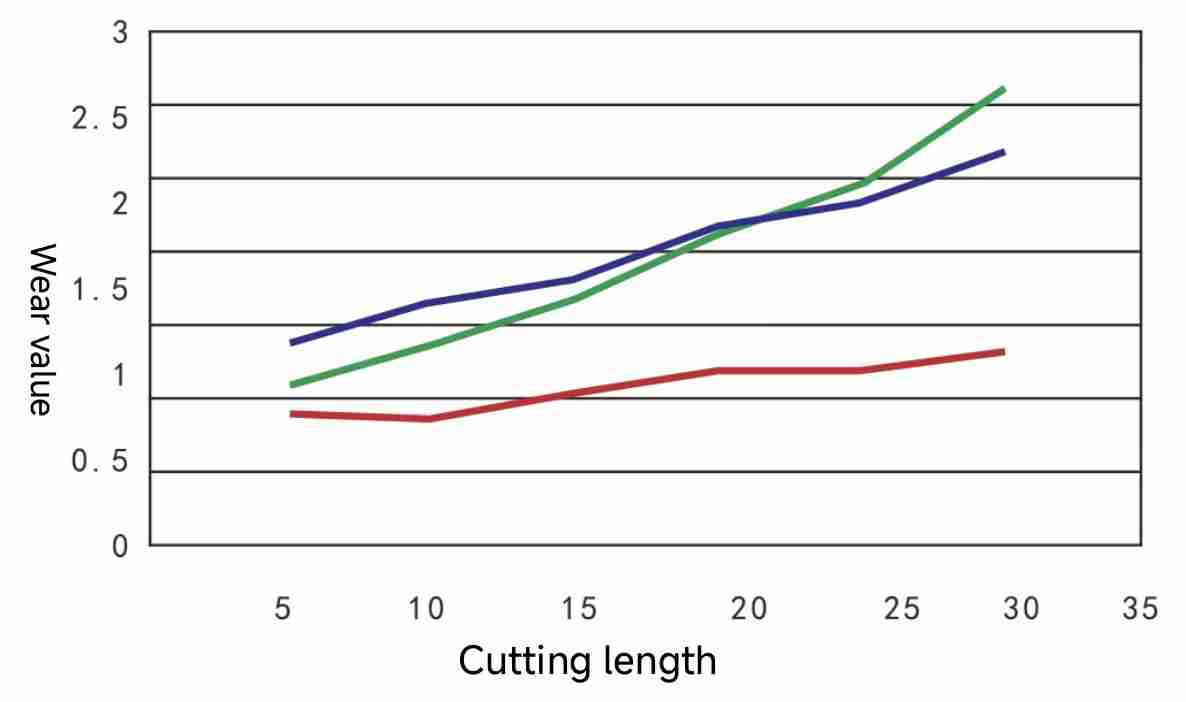
Conclusion of test Result: In this experiment, our company ‘s tool performance is superior to competitors in the same type
Practical Application Cases
Case 1: Precision Machining of Mold Cavities in Tool Steel
- Workpiece: HRC60 tool steel mold cavity (curved surface profile)
- Tool Used: “Hard Material Specific Two Blade Ball End Mill” (φ8mm, TiAlN coated)
- Machining Results: Cavity surface finish Ra 0.6μm, eliminating post-polishing; After machining 50 consecutive parts, tool wear ≤0.01mm, achieving 4x longer tool life than standard tools
- Customer Feedback: Machining efficiency increased by 30%, reduced tool change frequency, minimized production downtime
Case 2: Aerospace Titanium Alloy Component Machining
- Workpiece: Ti6Al4V titanium alloy curved component (high-strength hard material)
- Tool Used: “Hard Material Specific Two Blade Ball End Mill” (φ5mm, uncoated)
- Machining Results: Part surface contour error ≤0.01mm, no tool adhesion or burrs; minimal vibration during cutting with high machining stability
- Customer Feedback: Resolved issues of edge chipping and poor precision in titanium alloy machining, meeting the high-precision requirements for aerospace components
Frequently Asked Questions About End Mills
Q1: Which end mill is best for milling hard materials like mild steel when cut quality matters?
A: If you’re milling mild steel and need top-notch cut quality, a coated solid carbide end mill is your best bet. Here’s what to focus on:
- Choose the right coating: Go for TiCN (Titanium Carbonitride) or TiAlN (Titanium Aluminum Nitride) coatings. These coatings are hard, resist oxidation well, and reduce friction between the tool and workpiece. This prevents built-up edge and keeps the machined surface smooth.
- Tool geometry: Pick an end mill with positive rake angles (usually 5°–15°). Positive rake angles lower cutting force, so the workpiece won’t deform easily, and the finish will be better. For finishing operations, use a multi-flute design (4–6 flutes). More flutes mean more cutting edges work at the same time, which reduces feed per tooth and improves surface roughness.
- Edge treatment: Opt for end mills with honed edges. Honing removes microcracks on the edge, preventing chipping during cutting and keeping cut quality consistent.
Q2: What’s the difference between an end mill and a ball mill?
A: The key differences between end mills and ball mills come down to cutting edge shape, intended applications, and machining results. Check out the breakdown below:
| Feature | End Mill | Ball Mill |
|---|---|---|
| Cutting Edge Shape | Flat bottom edge, straight side edges; both bottom and side edges can cut | Spherical cutting edge (full sphere at the end); edges distributed along the sphere’s surface |
| Main Machining Uses | Ideal for flat surfaces, grooves, step surfaces, slots, and straight-edge contouring | Great for 3D curved surface machining, mold cavity machining, complex curved contour shaping, and finishing of curved workpieces |
| Machining Result | High efficiency for flat/straight features; produces flat groove bottoms | Cutting contact points change continuously, avoiding sharp corner marks on curved surfaces for a smoother finish |
Q3: What type of end mill works for highly abrasive materials?
A: For highly abrasive materials—like fiberglass-reinforced plastics (FRP), ceramic composites, wear-resistant cast iron, and concrete—end mills need to be tough, wear-resistant, and impact-resistant. Here are the top recommendations:
- PCD (Polycrystalline Diamond) coated end mills: PCD is extremely hard (second only to natural diamond) and super wear-resistant. It’s the first choice for non-metallic abrasive materials (e.g., FRP, wood-based panels with abrasive fillers). Note: PCD tools can’t machine ferrous metals—diamond reacts with iron at high temperatures, ruining the tool.
- CBN (Cubic Boron Nitride) end mills: CBN has high hardness and thermal stability, making it perfect for metallic abrasive materials (e.g., wear-resistant cast iron, high-speed steel). It handles high cutting temperatures well and has good chemical inertness with ferrous metals.
- Ultrafine-grain solid carbide end mills with special coatings: For less abrasive materials, use ultrafine-grain carbide end mills coated with AlTiN (Aluminum Titanium Nitride). The ultrafine-grain carbide base offers better toughness and wear resistance, while the AlTiN coating boosts high-temperature wear performance.
- Additional design tips: Choose end mills with negative rake angles and thick core diameters. Negative rake angles strengthen the cutting edge to prevent chipping from abrasion; thick cores improve tool rigidity and avoid deflection during machining.
Q4: Are carbide end mills better than HSS?
A: You can’t just say carbide end mills are better than HSS (High-Speed Steel) ones. It all depends on the material you’re machining, process requirements, and budget. Here’s a clear comparison and selection guide:
- Advantages of carbide end mills:
- Higher hardness (HV1800–2400 vs. HV800–1000 for HSS) and better wear resistance, ideal for hard materials (e.g., mild steel, alloy steel, cast iron).
- Excellent high-temperature resistance (handles up to 1000°C), enabling high-speed cutting for better efficiency. It maintains stable cutting performance at high speeds, ensuring consistent quality.
- Longer tool life, reducing tool change frequency and boosting productivity.
- Advantages of HSS end mills:
- Better toughness, strong impact and vibration resistance, and less likely to break. Great for low-speed cutting, intermittent cutting, and soft materials (e.g., aluminum alloy, copper, plastic).
- Lower cost; can be re-sharpened multiple times after wear, making it more cost-effective for small-batch or simple machining tasks.
- Easier to machine into complex shapes (e.g., custom profile end mills) with more flexibility for customization.
Summary: Carbide end mills are better for hard materials, high-efficiency, and high-precision cutting. HSS end mills are more economical and practical for soft materials, small-batch production, or tight budgets


Request a Quote for Carbide Tools