Tungsten Carbide 2/4 Flute Ball Nose End Mill
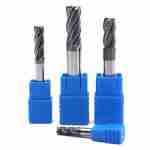
Tungsten Carbide 2/4 Flute Ball Nose End Mill PIC


Tungsten Carbide 2/4 Flute Ball Product Detail:
| Customization: | Available |
|---|---|
| Coating: | Altin, Tiain, Ticn, Tin Nanocoating |
| Tooth Form: | Spiral Tooth |
Basic Info. of Tungsten Carbide 2/4 Flute Ball Nose End mill
| Product Nmae | Tungsten Carbide 2/4 Flute Ball Nose End mill | Custom Support | ODM/OEM |
| Product Item | Tungsten Carbide Milling Cutter Coating 2/ 4 Flute Ball Nose End mill | Total Length | 50-150mm |
| Structure | Integral | Flute | 2/3/4/6 Flute |
| Material | Carbide, Tungsten Steel, Tungsten Carbide | Apply to | Alloy Steel, Cast Iron, Stainless Steel, Modulated |
| Type | Solid Carbide End Mill | Sample | Get It for Free |
| Precision | High Precision | Transport Package | 1 Plastic Tube, Set of 10 |
| Controlling Mode | CNC | Specification | 1-20mm |
| Processing Type | Metal | Trademark | Yuchang |
| Usage | General/High Speed | Origin | China |
| HRC | 45/55/58/62/65 | HS Code | 8207709000 |
| Tolerance | 0~-1 Wire | Production Capacity | 200000/Month |
| MOQ | Flexible |
What is the key Differences between 2 Flute vs 4 Flute Tungsten Carbide Ball Nose End Mill
| Dimension | 2 Flute Ball Nose End Mill | 4 Flute Ball Nose End Mill |
|---|---|---|
| Chip Evacuation | Wider flute spacing, excellent chip clearance | Narrower flute spacing, slightly weaker chip evacuation |
| Suitable Materials | Aluminum, copper, wood, plastic and other soft materials | Steel, stainless steel, titanium alloy and other hard materials |
| Surface Finish | Rougher finish, suited for roughing | Smoother finish, suited for finishing |
| Feed Rate | Relatively lower | Higher, better production efficiency |
| Tool Rigidity | Lower rigidity, more prone to vibration | Higher rigidity, reduces vibration |
| Cutting Depth | Slightly weaker depth capability | Allows deeper cuts with higher precision |
| Tool Life | Performs well in soft materials | Longer lifespan in hard materials |
What are the Key Advantages of the 4 Flute Ball Nose End Mill
Superior Surface Finish
With more cutting edges, a 4-flute ball nose end mill leaves finer tool marks with each pass, resulting in a smoother machined surface. This is especially evident in mold cavity and 3D contour finishing, where surface quality is noticeably better than 2-flute tools.
Higher Feed Efficiency
More cutting edges mean more cutting engagements per revolution at the same spindle speed, enabling higher overall feed rates and significantly improved productivity. This makes it an effective choice for reducing production costs in high-volume machining.
Greater Tool Rigidity
The 4-flute structure increases the tool body cross-section, delivering stronger rigidity and less vibration during cutting. This is particularly valuable when machining deep cavities, long overhangs, or hard materials, effectively reducing tool deflection and the risk of chipping.
Wider Material Compatibility
The 4-flute ball nose end mill handles both soft and hard materials — from aluminum and wood to steel, stainless steel, titanium alloys, and nickel-based alloys. By comparison, 2-flute tools have clear limitations in finishing hard materials.
Longer Tool Life
The spherical tip engages the workpiece more smoothly, distributing cutting forces evenly. Combined with better heat dissipation across four flutes, overall tool wear is slower and tool life is extended.
Main Application Scenarios
- 3D contour finishing of molds and die-cast parts
- Profile milling of automotive and aerospace components
- Radius and fillet surface machining
- Deep cavity slotting and corner cleanup


Can a 4-flute tungsten carbide ball nose end mill be used for roughing?
It is not recommended for heavy roughing. The smaller chip clearance of a 4-flute tool can cause chip congestion and overheating during high material removal operations. A 2-flute tool is preferred for roughing passes.
When should I use a 2-flute end mill?
Choose a 2-flute end mill when machining soft materials such as aluminum, copper, plastic, or wood. The wider flute spacing ensures smooth chip evacuation, reduces cutting resistance, and supports high-speed roughing without chip clogging or tool overheating.
What are the main applications of tungsten carbide ball nose end mills?
Ball nose end mills are primarily used for 3D contour milling, mold cavity finishing, radius profiling, and ramp milling. The hemispherical tip enables smooth transitions and is ideal for complex curved surfaces and fine contour work.
If any questions or need a tailored tool for your project? Reach us now for a free quote.




Request a Quote for Carbide Tools